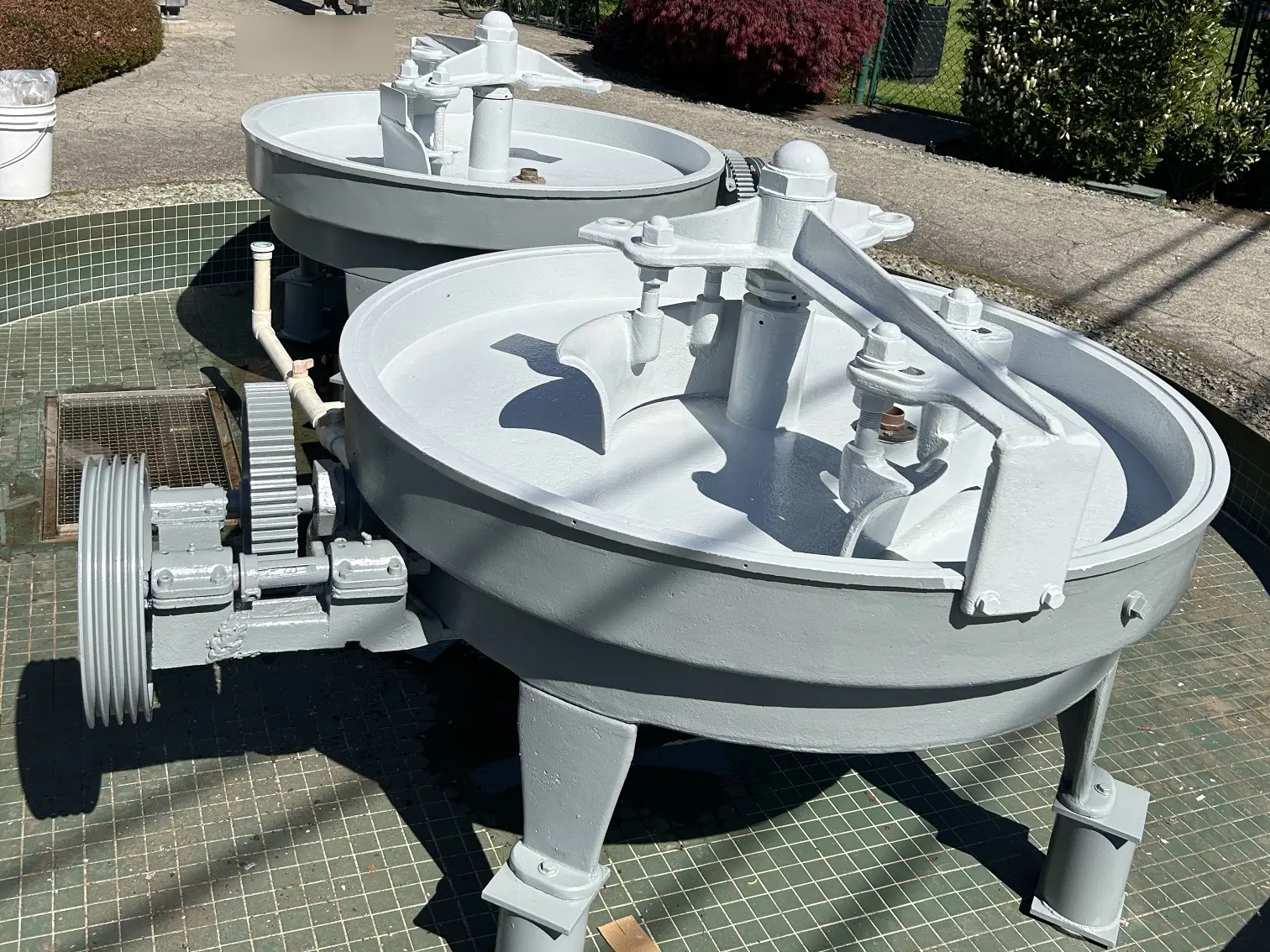
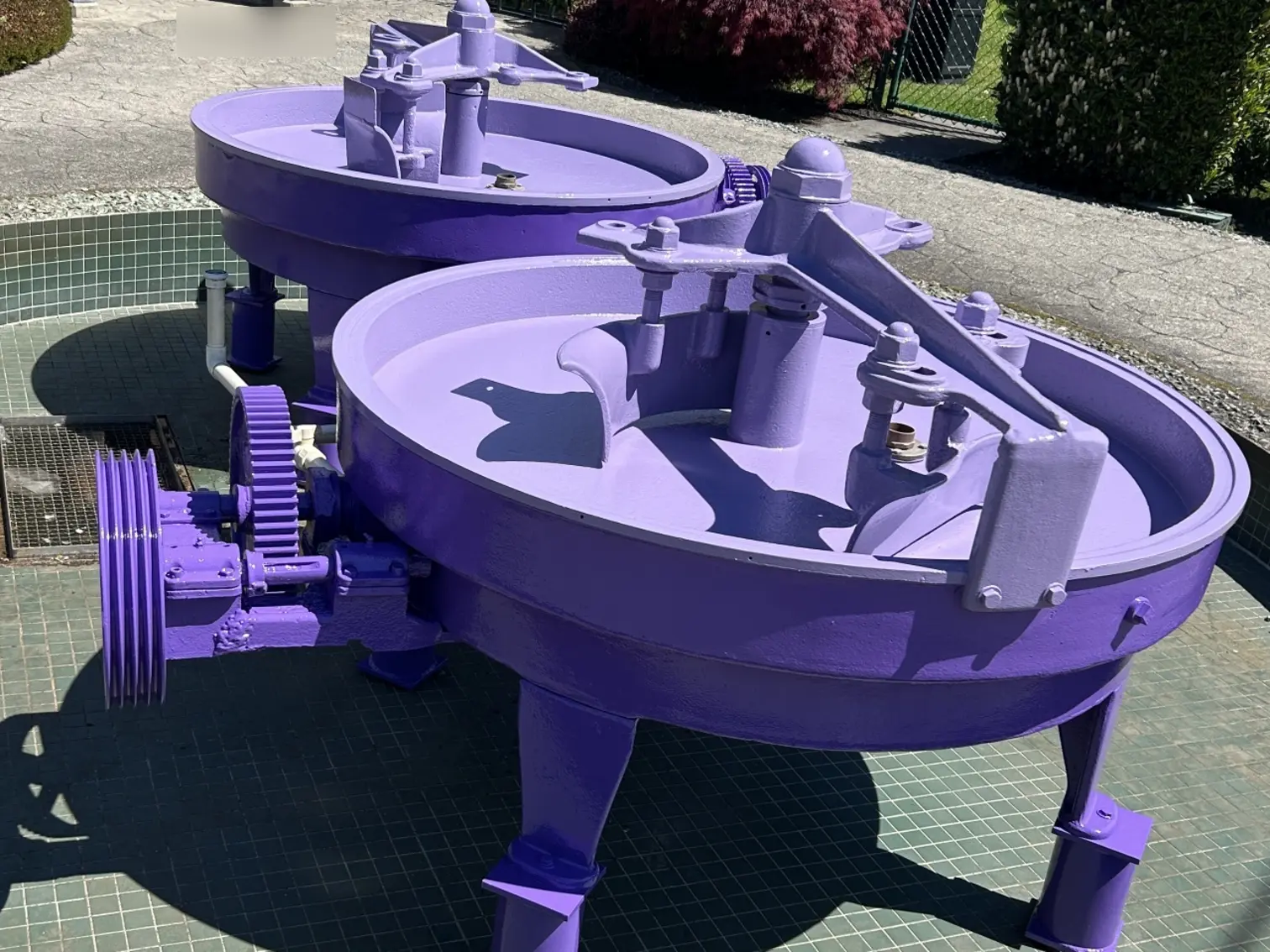
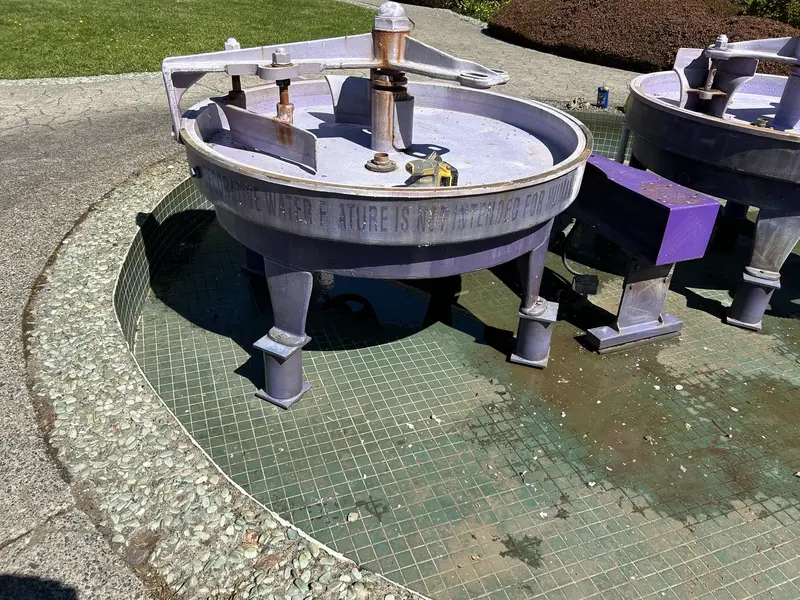
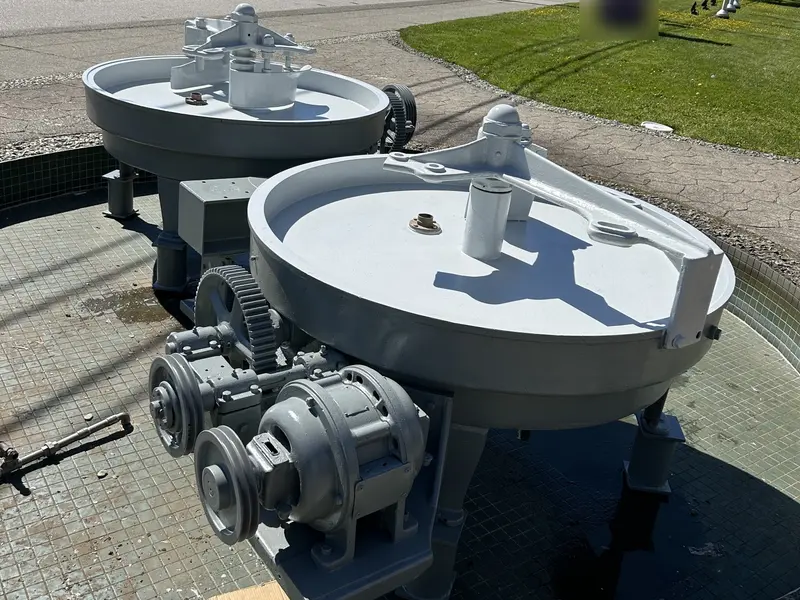
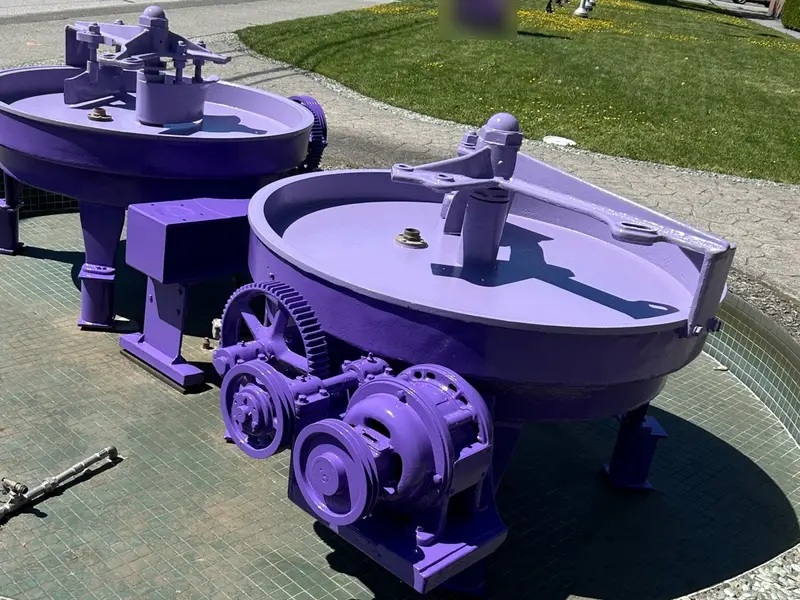
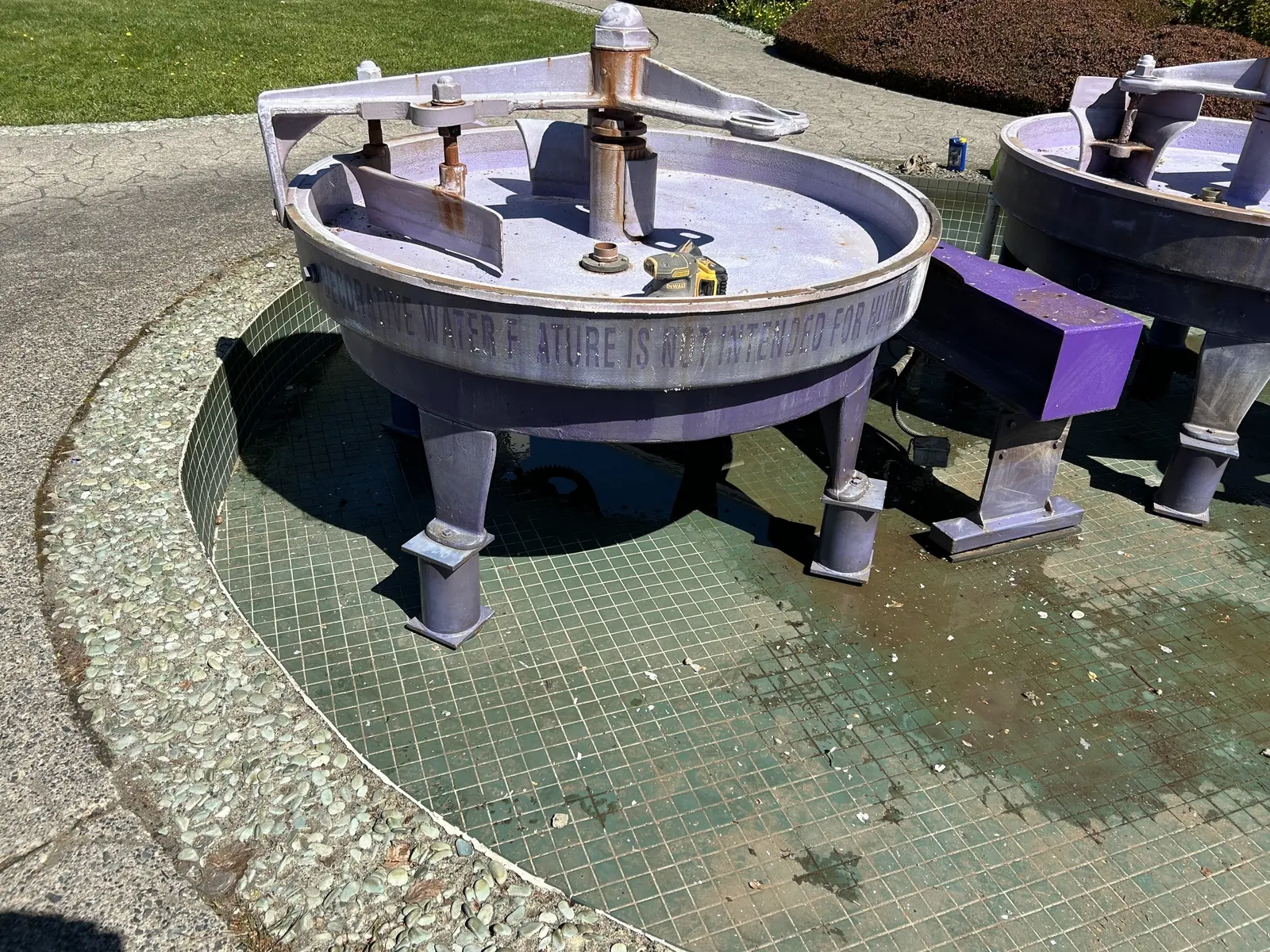
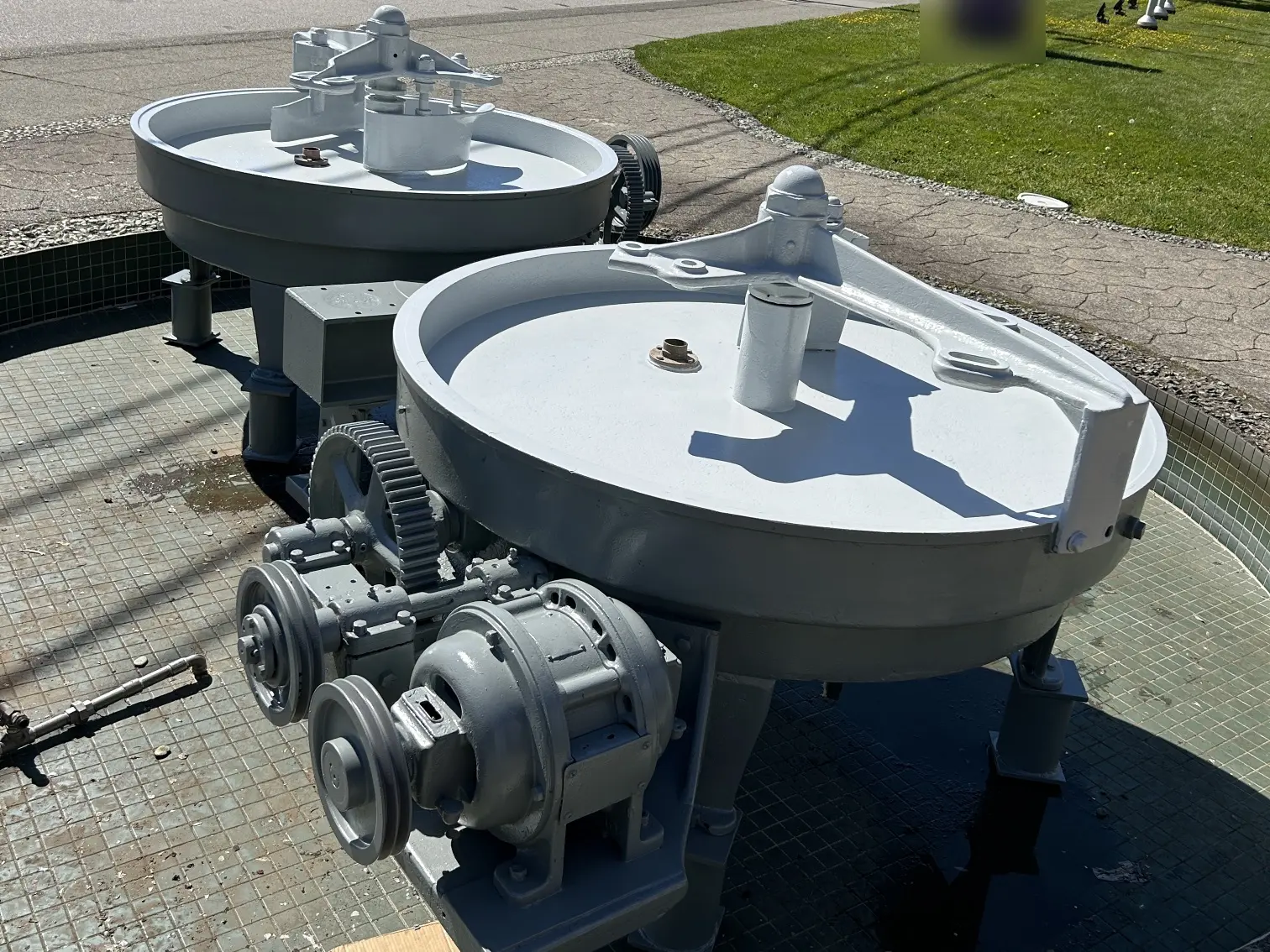
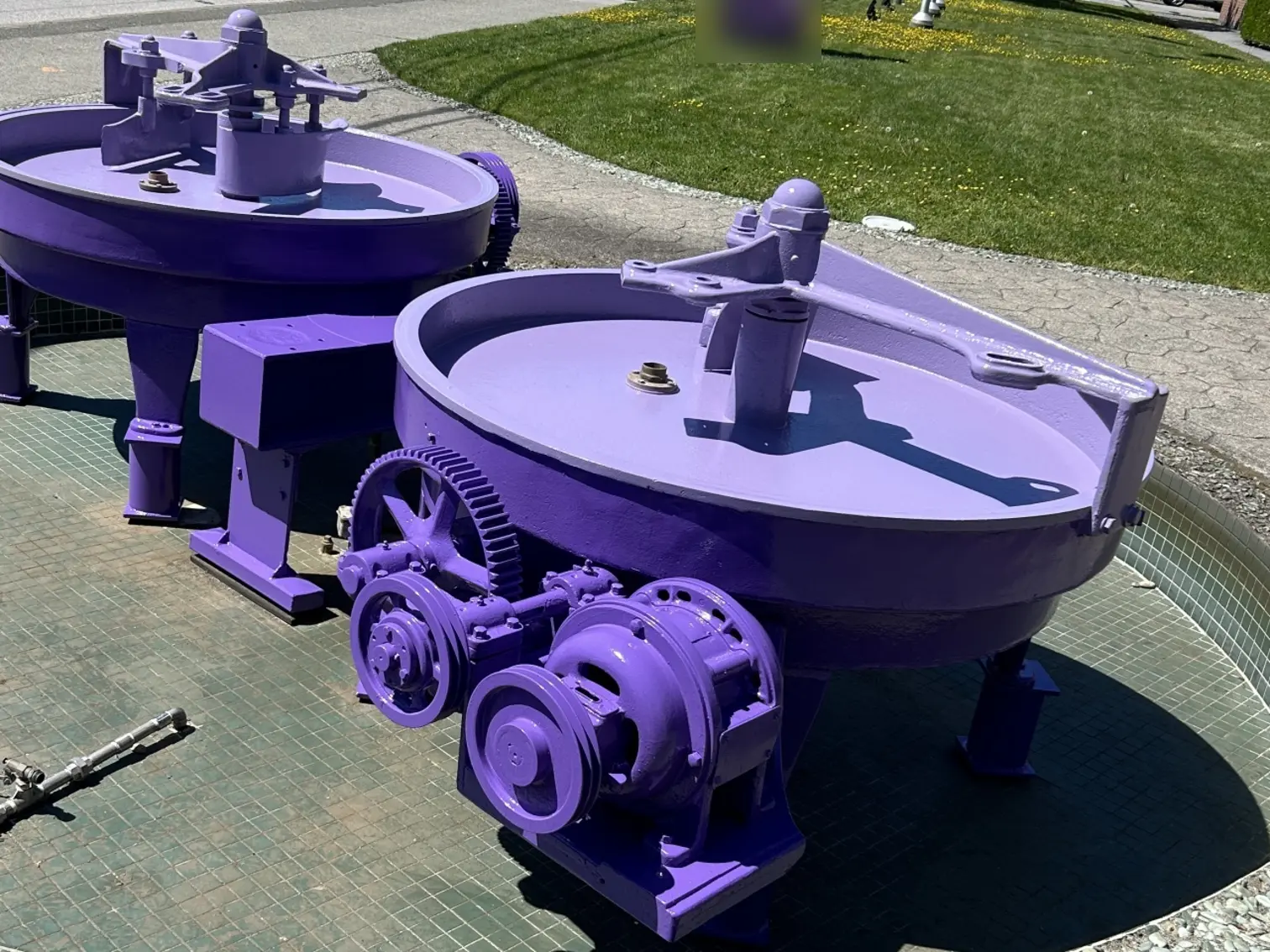
This outdoor water feature is built from two pieces of antique machinery standing in a tiled pool. Years of running water had worn the old coating through and left rust on the shafts, bolts and blades.
We sanded the old coating back and removed the rust, then primed every surface with an epoxy primer. Because the machinery sits in water, the finish is an industrial epoxy, applied in two shades of purple.
Safety on jobs like this: We keep safety data sheets on site for every product we use and handle them under our WHMIS program. Chemical safety, Emergency plan
A one-off job like this follows the same steps as our larger ones. Here is how they applied.
01
Site walkthrough
We look at the condition of the old coating, where the rust is, and how the feature is drained and shut off.
02
Choosing the coating system
Anything that sits in water needs a coating made for it, so the system is chosen from the manufacturer's data sheets for wet conditions.
03
Scheduling the shutdown
The feature is drained and kept dry for the work. You know how long it will be out of service, including cure time before the water goes back on.
04
Safety and site protection
The work area is closed to the public, and the tile, paving and plants around it are covered. Sanding and coating follow WorkSafeBC requirements.
05
Sanding and rust removal
The old coating is sanded back and the rust removed from shafts, bolts, gears and blades.
06
Inspection before priming
The foreman checks that the metal is clean, dry and free of rust before any primer goes on.
07
Epoxy primer
Every surface gets an epoxy primer, worked into the gear teeth, bolt heads and joints where water sits.
08
Epoxy finish coats
The finish is an industrial epoxy, applied to the manufacturer's instructions. This one was done in two shades of purple.
09
Cleanup
Coverings come off and the pool and paving are cleaned up.
10
Final walkthrough and handover
We go over the finished work with you and confirm when the water can go back on.
Standards: Steel is prepared to SSPC standards and coated to MPI standards, following the epoxy manufacturer's instructions for surface preparation, mixing and cure time before immersion.
 Get a quote Text Us