Free quote

Tell us about your project.

Tell us about your building and the work you need. We’ll get back to you to set up a site visit. Prefer to talk? Call 604-861-6644.

Text us

By sending a request, you confirm you have read the privacy policy.

Pipe colour coding

Pipe colour coding and labelling.

When a line leaks or has to be shut off in a hurry, nobody should be guessing what's inside it.

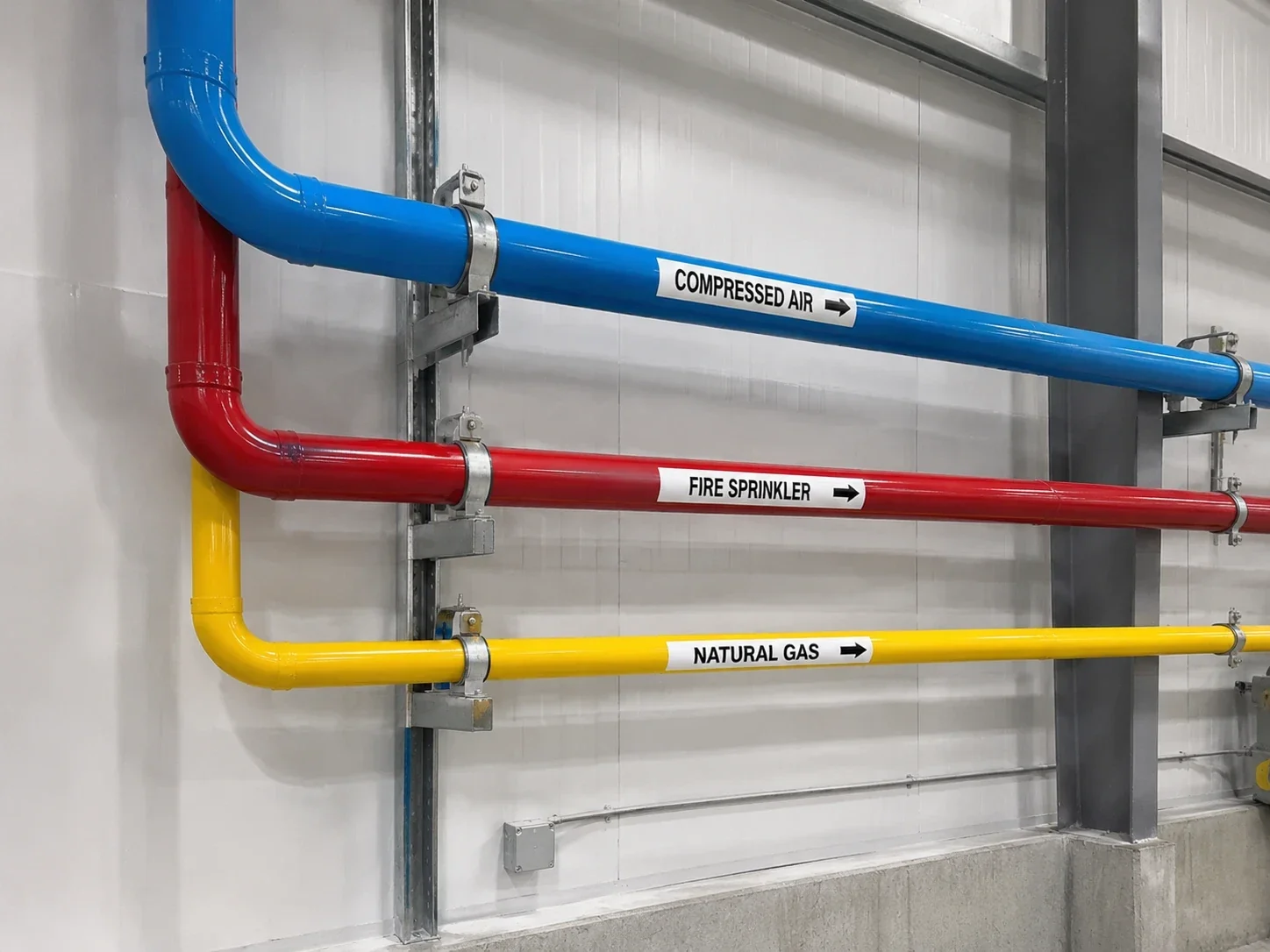
We paint pipes in code colours and add labels and flow arrows, following ASME/ANSI A13.1 or the colour chart your site already uses.

Book a site visit →

Pipe work we do

  • Painting in code colours

    Pipe runs painted in the colour your standard sets for what they carry.

  • Labels and flow arrows

    So anyone walking the floor can read what's in a line and which way it's moving.

  • Fixing faded or mixed-up colours

    Old, faded or mismatched pipe colours brought back in line with your standard.

  • Your standard or A13.1

    If your site has its own colour chart, we work to it. If it doesn't, we code to ASME/ANSI A13.1.
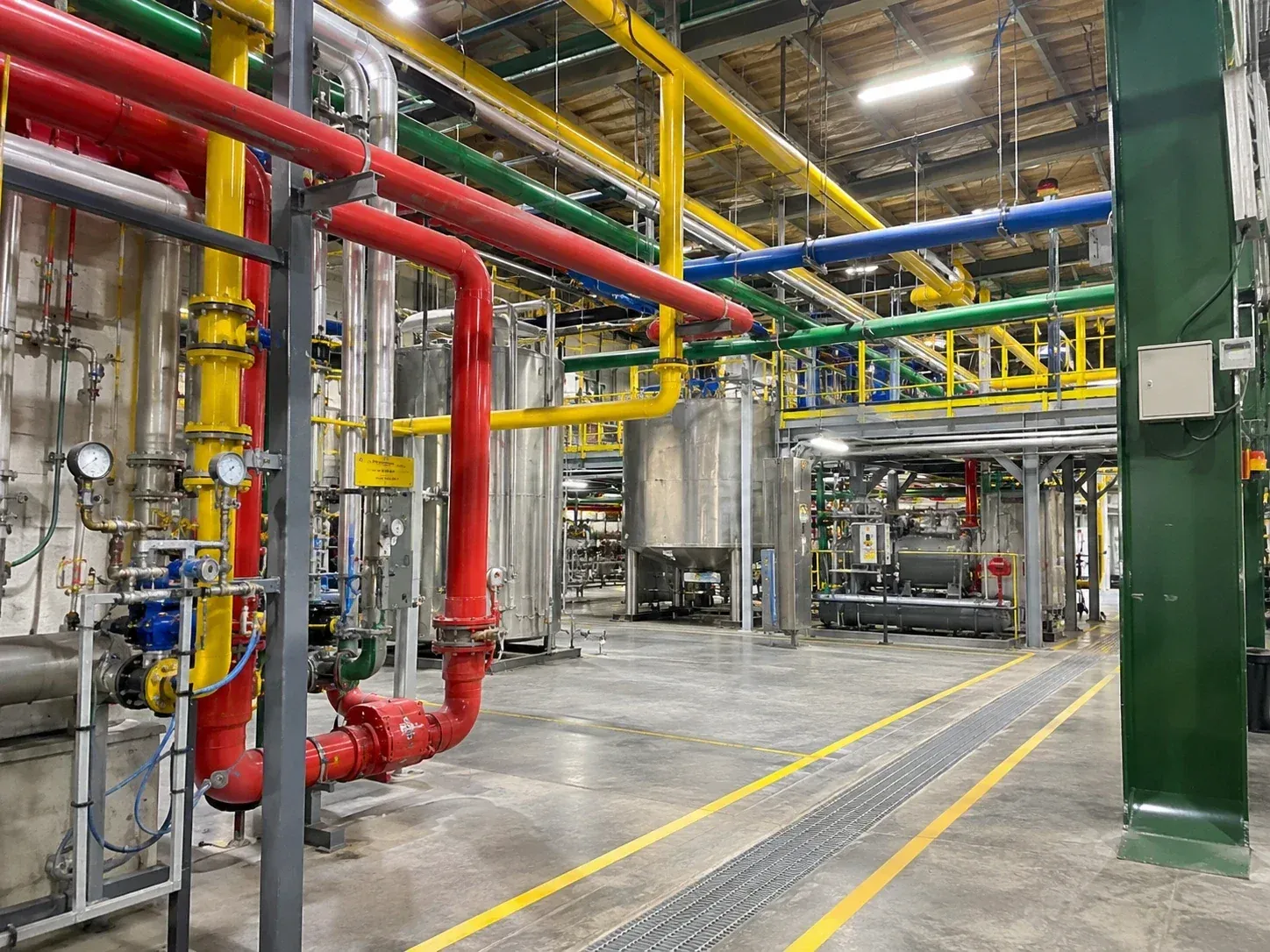
Plant floor with red, yellow, green and blue colour-coded pipes above stainless tanks
Blue, red and yellow pipes labelled compressed air, fire sprinkler and natural gas

Who this is for

Plant and maintenance managers, facility managers, and the engineers and contractors on new or upgraded systems. Most pipe coding can be done while the plant keeps running, one area at a time. Where it can't, we work in a shutdown, at night or on a weekend.

How a pipe job runs

  1. Walk the lines

    We go line by line: what it carries and which way it flows.

  2. Clean them up

    Pipes are cleaned, and rust and loose paint come off.

  3. Paint the colours

    Each line gets its code colour.

  4. Label and arrow

    Labels and flow arrows go on, then we check every line with you.

See the full process, step by step

For plant and maintenance managers planning pipe colour coding, here is every step we follow, from walking the lines to the final check.

  1. 1. Walking the pipe runs

    We walk the runs with your maintenance manager and go line by line: what it carries, which way it flows, and which standard we're coding to. That's your site's own chart if you have one, and ASME/ANSI A13.1 if you don't.

    • Walk-through with your manager
    • What each line carries
    • Flow direction
    • Which standard we follow
  2. 2. Safety plan

    A lot of pipe work is overhead, so the plan covers how we'll reach it: lifts run by trained operators with harnesses on boom lifts, or ladders where they're the right fit. Your site rules and WorkSafeBC requirements are part of the plan, and safety data sheets stay on site.

    • How each run is reached
    • Lifts run by trained operators
    • Ladders where they fit
    • Site rules and WorkSafeBC
    • Safety data sheets on site
  3. 3. Line list and quote

    You get a written scope that lists each line with its colour and labels, how it'll be cleaned and prepped, and the coatings we'll use. Work starts once you've approved it.

    • Every line, colour and label listed
    • Prep for each line
    • Coatings named
    • Your approval first
  4. 4. Working around the plant

    Pipe coding can usually happen while the plant runs, one area at a time. Where it can't, we work in a planned shutdown, at night or on a weekend.

    • One area at a time
    • Shutdowns, nights or weekends where needed
  5. 5. Setting up

    The area under the work is taped and coned off, and anything near the pipes that shouldn't get paint is covered.

    • Area under the work closed off
    • Nearby equipment covered
  6. 6. Cleaning the pipes

    Pipes are cleaned so the paint sticks. On steel lines, rust and loose paint come off first with hand tools and power tools.

    • Pipes cleaned
    • Rust and loose paint removed on steel lines
  7. 7. Checking the pipe surface

    Lines carrying cold product can sweat, so we check the surface temperature against the dew point before painting. The surface has to be at least 3°C above the dew point and dry, and the room has to be inside the data sheet's limits.

    • Surface temperature against the dew point
    • At least 3°C above it
    • No painting on wet pipe
  8. 8. Painting the colours

    Primer goes on where the scope calls for it, then the code colour, by brush and roll, airless spray or HVLP, depending on what's around the pipe. Recoat times come from the data sheet.

    • Primer where the scope calls for it
    • Code colour applied
    • Brush and roll, airless or HVLP
    • Recoat times from the data sheet
  9. 9. Labels and arrows

    Once the paint is dry, the labels and flow arrows go on where people working nearby can read them.

    • Labels on each line
    • Flow arrows showing direction
    • Placed where people can read them
  10. 10. Final walk and handover

    We walk the lines with you and check every colour and label against the list. Anything that's off is fixed, the area is cleaned up, and you get our written guarantee.

    • Every line checked against the list
    • Fixes made
    • Area cleaned up
    • Written guarantee

Standards: Lines are coded to ASME/ANSI A13.1 or your site's own chart, and each coating goes on as its data sheet and MPI standards require.

Safety on these jobs: High pipe runs are reached from lifts or ladders set up for the spot, and only trained operators run the lifts. Lifts, Ladders

Where we do this work: Pipe coding in plants and facilities across Metro Vancouver and the Fraser Valley.

More industrial coatings services Industrial Coatings Dryfall CeilingsSafety Yellow and BollardsRust Removal and SteelTank and Equipment PaintingFood and Pharma WallsChemical-resistant CoatingsProtective CoatingsTank Linings

Related Warehouse paintingWarehouse safety lines

Common questions

Don't see your question?

Call 604-861-6644 Talk to a painter

What colour standard do you code pipes to?

Your site's own colour chart if you have one. If you don't, we follow ASME/ANSI A13.1.

Do you only paint the pipes, or label them too?

Both. We paint the pipes in code colours and add labels and flow arrows.

Can you do it while the plant is running?

Usually, yes. We work one area at a time so the rest of the plant keeps going. Lines that can't be worked on live are done in a planned shutdown, at night or on a weekend.

How much does pipe colour coding cost?

We price every pipe job after a free site visit. The price depends on how many lines there are and how far they run, how high they are, how much cleaning and rust removal they need, how many labels and arrows go on, and when the work can be done. You get a written quote before any work starts, and the price only changes if the scope changes or work is added or removed.
Four-storey building with restained wood columns and beams at the entrance

Looking for a free quote?

Tell us about your building and the work you need. We’ll get back to you to set up a site visit.

Phones answered 7am–7pm, every day. Quote requests are acknowledged the same day.

  • Bonded & insured
  • Member in good standing of DC38
  • Red Seal painters on our crews
  • Lead jobs done by lead-trained crews

Tell us about your project.

By sending a request, you confirm you have read the privacy policy.