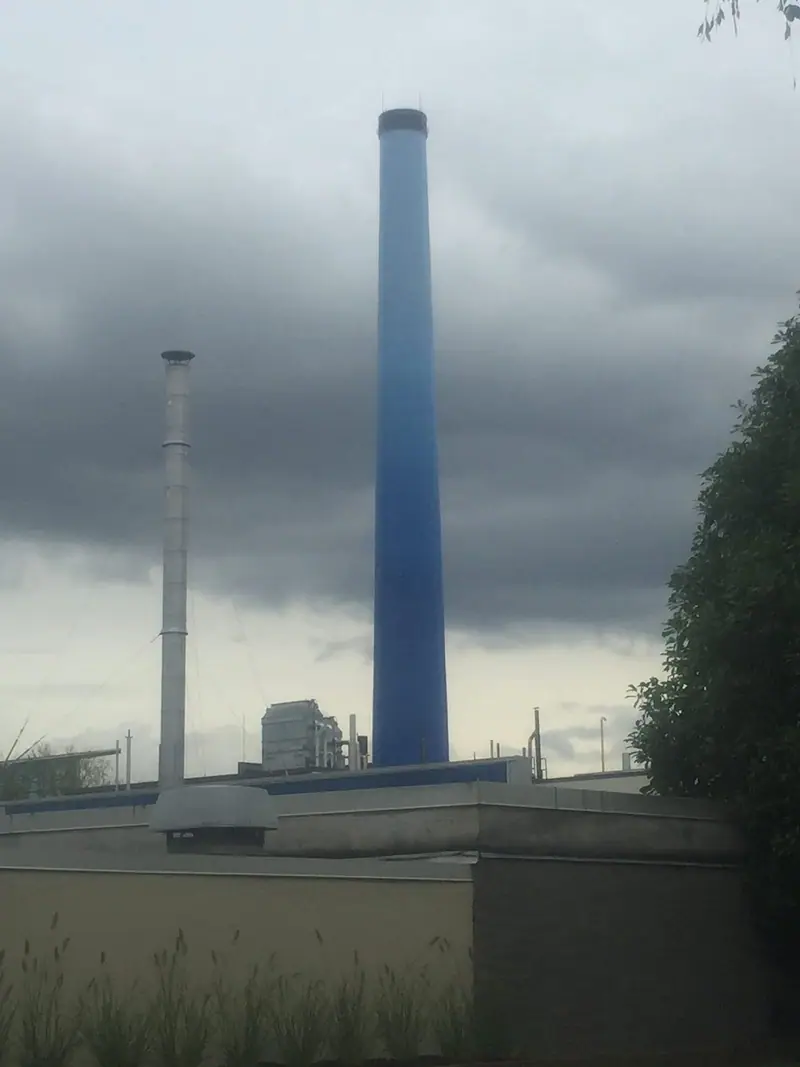
Scrapers and wire brushes for flaking paint and light rust. Grinders and needle guns when it's heavy and scaled up.
The right primer
Zinc-rich, epoxy, rust-inhibitive alkyd or direct-to-metal (DTM). Which one depends on the steel, how exposed it is, and the spec.
Topcoats that last
Polyurethane, polyaspartic, epoxy or industrial enamel over the primer, depending on whether the steel lives indoors or out.
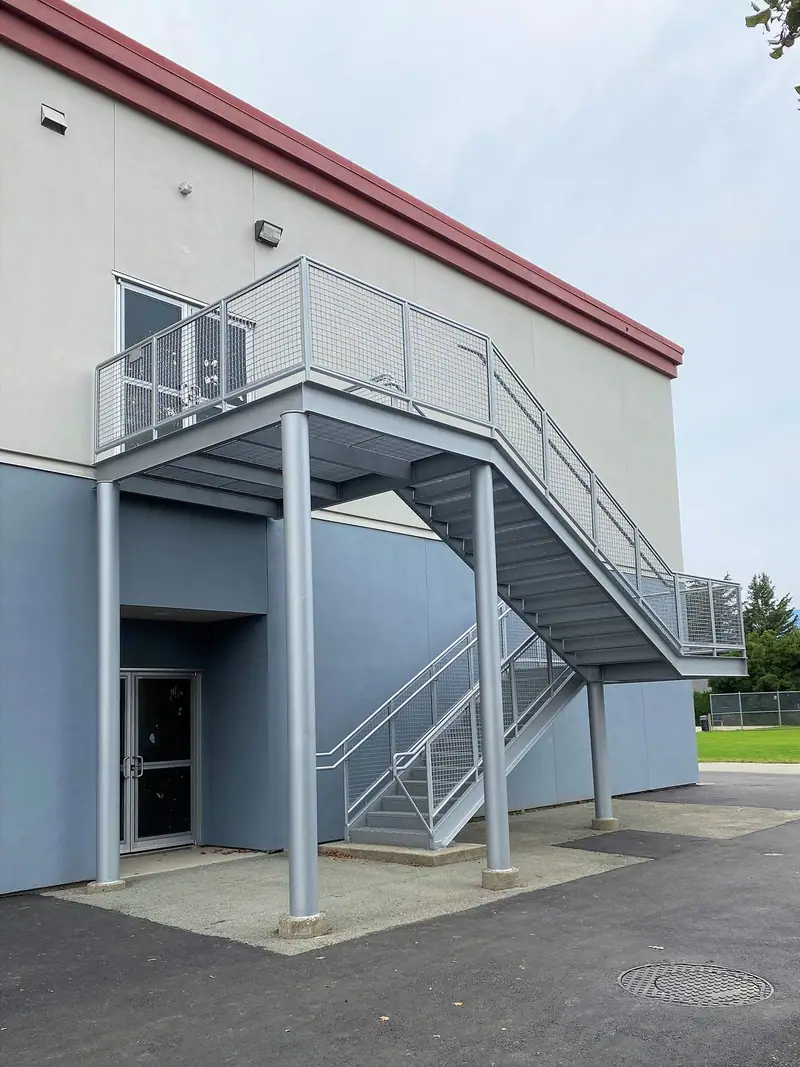
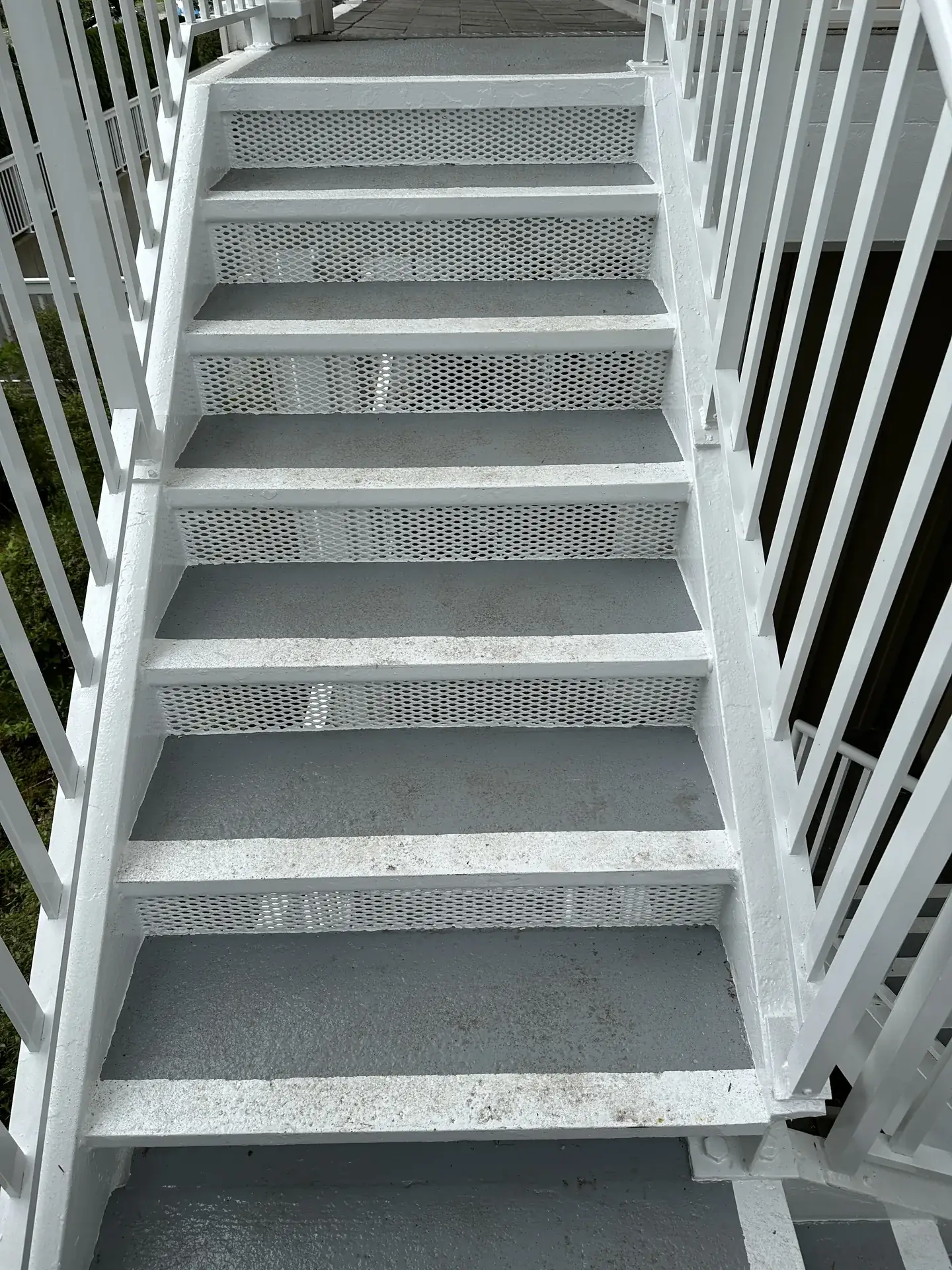
Exterior steel stairs
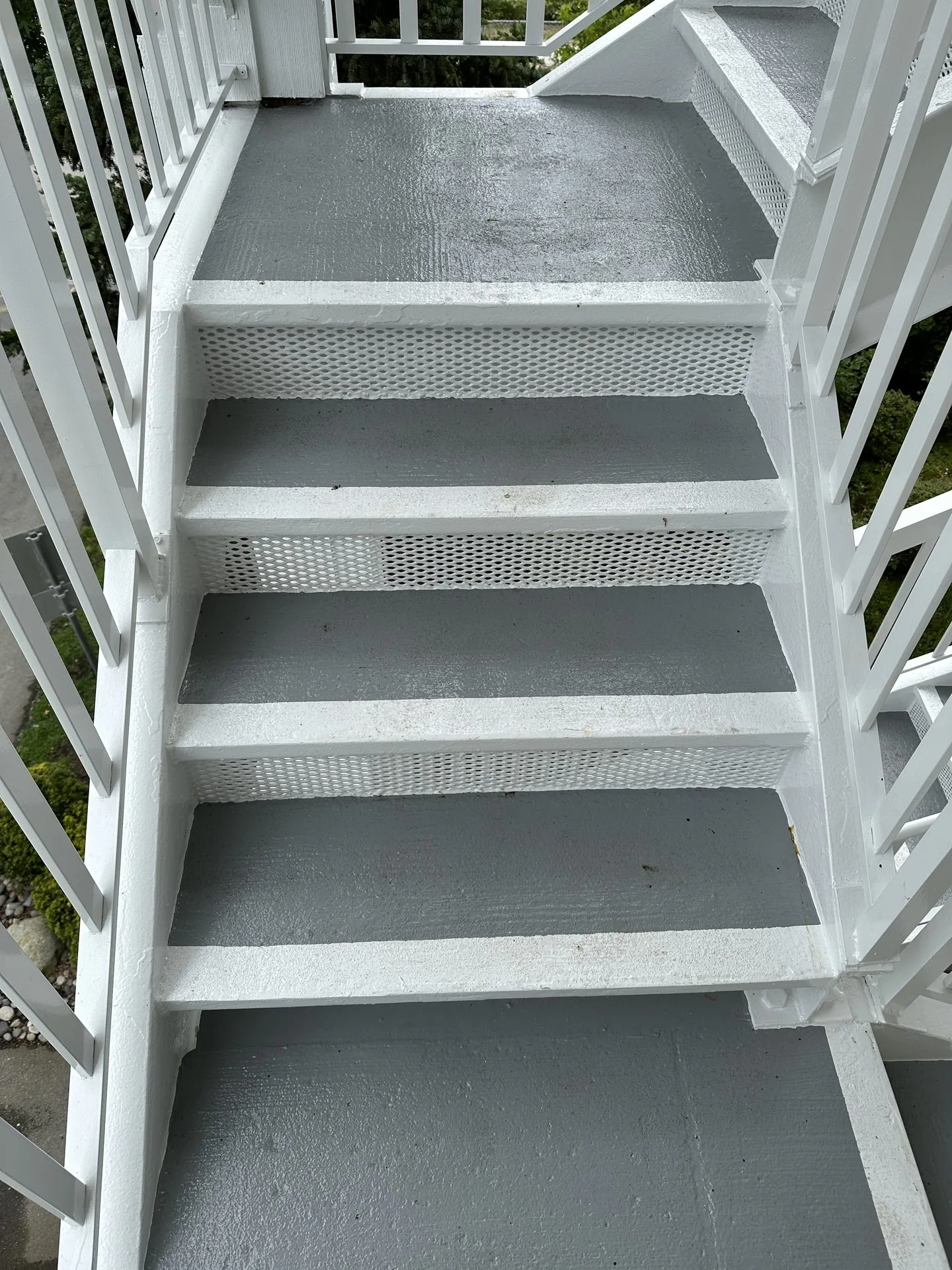
On one set of exterior stairs, the old coating had failed badly. We cleaned the steel back and recoated it with a single coating that works as both primer and finish.
Facility and maintenance managers, plant and warehouse owners, and the engineers and general contractors who write the specs. We can work in a planned shutdown, at night, on weekends, or one area at a time while the site keeps running.
We check how far the rust has gone and how we'll reach it.
Clean it back
Rust and loose paint come off with hand and power tools.
Prime it
Bare steel gets the primer named in the scope.
Topcoat and test
Topcoats go on, then we check film thickness and adhesion.
See the full process, step by step
For facility and maintenance managers planning steel work, here is every step we follow, from the first look at the rust to handing the area back.
1. Looking at the steel
We walk the site with your facility or maintenance manager and look closely at every piece of steel on the list. Is it surface rust, or is it scaling? Is the old coating still holding anywhere? How do we reach it, and when can we work on it?
Walk-through with your manager
How far the rust has gone
What's left of the old coating
Access and timing
2. Safety plan
Your site's rules, WorkSafeBC requirements and our own safety program go into one plan. High steel is worked on from lifts run by trained operators, with a harness on boom lifts and every lift checked before use. Our respirator program covers the crew, safety data sheets for every coating stay on site, and anyone on the crew can stop the job if something isn't safe.
Site rules, WorkSafeBC and our program in one plan
Lifts run by trained operators, checked before use
Harnesses on boom lifts
Respirator program
Safety data sheets on site
Anyone can stop the job
3. Written scope
The scope lists every piece of steel, the prep level it gets (an SSPC / AMPP level, the coating's data sheet, or your engineer's spec), and the primer and topcoat going on it. Nothing starts until you've signed off.
Every piece of steel listed
Prep level for each
Primer and topcoat named
Your sign-off before we start
4. Picking the timing
Grinding and needle-gun work is loud and dusty, so we plan it around you: in a planned shutdown, at night, on weekends, or one area at a time while the rest of the site keeps running.
Planned shutdowns
Nights and weekends
One area at a time
5. Loading up
Grinders, needle guns, scrapers and wire brushes leave our warehouse with the primers and topcoats on the scope, plus masking, tape, signs and cones. If the job needs a lift we don't own, it's booked ahead.
Hand and power tools
The coatings on the scope
Masking and barriers
Lifts booked ahead
6. Closing off the area
The work area is taped, signed and coned off, and anything close by that can't be moved is covered, so dust and overspray stay where we're working.
Area taped, signed and coned off
Nearby equipment covered
7. Cleaning back the rust
Light rust and flaking paint come off with scrapers and wire brushes. Heavier rust and scale get grinders and needle guns. We work to the prep level in the scope, then clean off the dust before any primer goes on.
Scrapers and wire brushes
Grinders and needle guns
Prepared to the level in the scope
Dust cleaned off
8. Checking conditions
Before priming, we read the surface temperature and the dew point. The steel has to be at least 3°C warmer than the dew point, and the air has to be inside the data sheet's temperature and humidity limits. Wet or frosty steel doesn't get coated.
Surface temperature and dew point read
Steel at least 3°C above the dew point
Inside the data sheet limits
No coating on wet or frosty steel
9. Primer
Bare steel gets the primer named in the scope: zinc-rich, epoxy, rust-inhibitive alkyd or DTM. We wait out the recoat time on the data sheet before the next coat goes on.
Zinc-rich, epoxy, alkyd or DTM
Recoat time from the data sheet
10. Topcoats
Polyurethane, polyaspartic, epoxy or industrial enamel goes on by airless spray, brush and roll, or HVLP, depending on the shape of the steel and what's around it. A wet film gauge tells us we're putting on enough as we go.
Polyurethane, polyaspartic, epoxy or enamel
Airless, brush and roll, or HVLP
Wet film gauge as we go
11. Testing the finish
Once it's dry, we check the film build with a DFT gauge and do adhesion tests. If the job has a third-party coatings inspector, they check it too. Thin spots and misses are fixed before sign-off.
DFT gauge readings
Adhesion tests
Third-party inspector where the job has one
Fixes before sign-off
12. Handing it back
Masking and equipment come out, the area is cleaned up, and you get our written guarantee.
Masking and equipment out
Area cleaned up
Written guarantee
Standards: Steel is prepared to the SSPC / AMPP level, data sheet or engineer's spec set for the job, and every primer and topcoat follows the manufacturer's data sheet and MPI standards.
Safety on these jobs: Our respirator program covers the crew on steel prep, and safety data sheets for every coating are kept on site. Respiratory protection, Chemical safety
Where we do this work: Steel work at plants, warehouses and facilities from Vancouver and Richmond out to Langley and Abbotsford.
Scrapers and wire brushes take off flaking paint and light rust. Grinders and needle guns handle heavier rust and scale. We work to the prep level set for the job, whether that's an SSPC / AMPP level, the coating's data sheet, or your engineer's spec.
Which primer do you use on steel?
It depends on the steel and where it is. We use zinc-rich, epoxy, rust-inhibitive alkyd and direct-to-metal (DTM) primers, and the scope names the one going on your job.
How do you know the coating is thick enough?
We check it wet with a wet film gauge while we're applying it, then dry with a dry film thickness (DFT) gauge. We also do adhesion tests, and on jobs with a third-party coatings inspector, they check it as well.
How much does rust removal and steel coating cost?
Every job is priced after a free site visit. The price comes down to how much steel there is, how far the rust has gone, how high and hard to reach it is, the primer and topcoat system, and when the work has to happen. You get a written quote before any work starts, and the price only changes if the scope changes or work is added or removed.
Looking for a free quote?
Tell us about your building and the work you need. We’ll get back to you to set up a site visit.
Phones answered 7am–7pm, every day. Quote requests are acknowledged the same day.
 Get a quote Text us
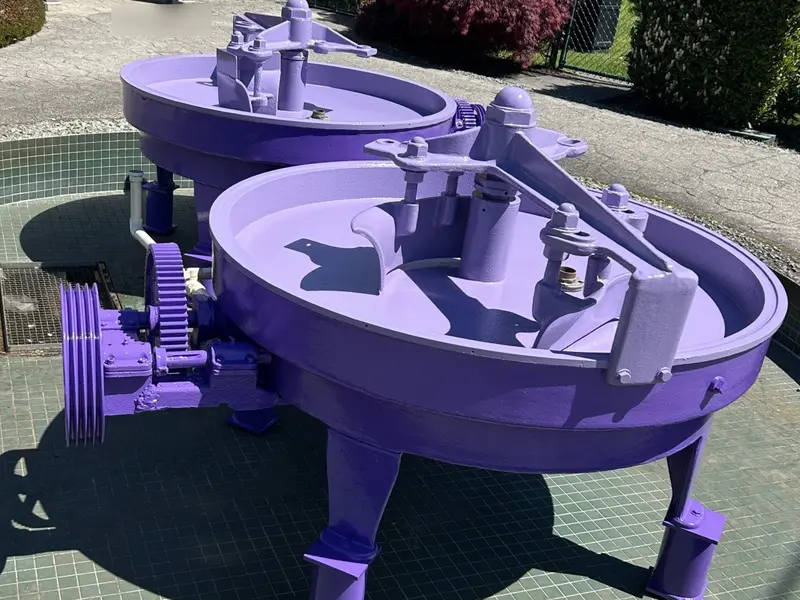 Before & after