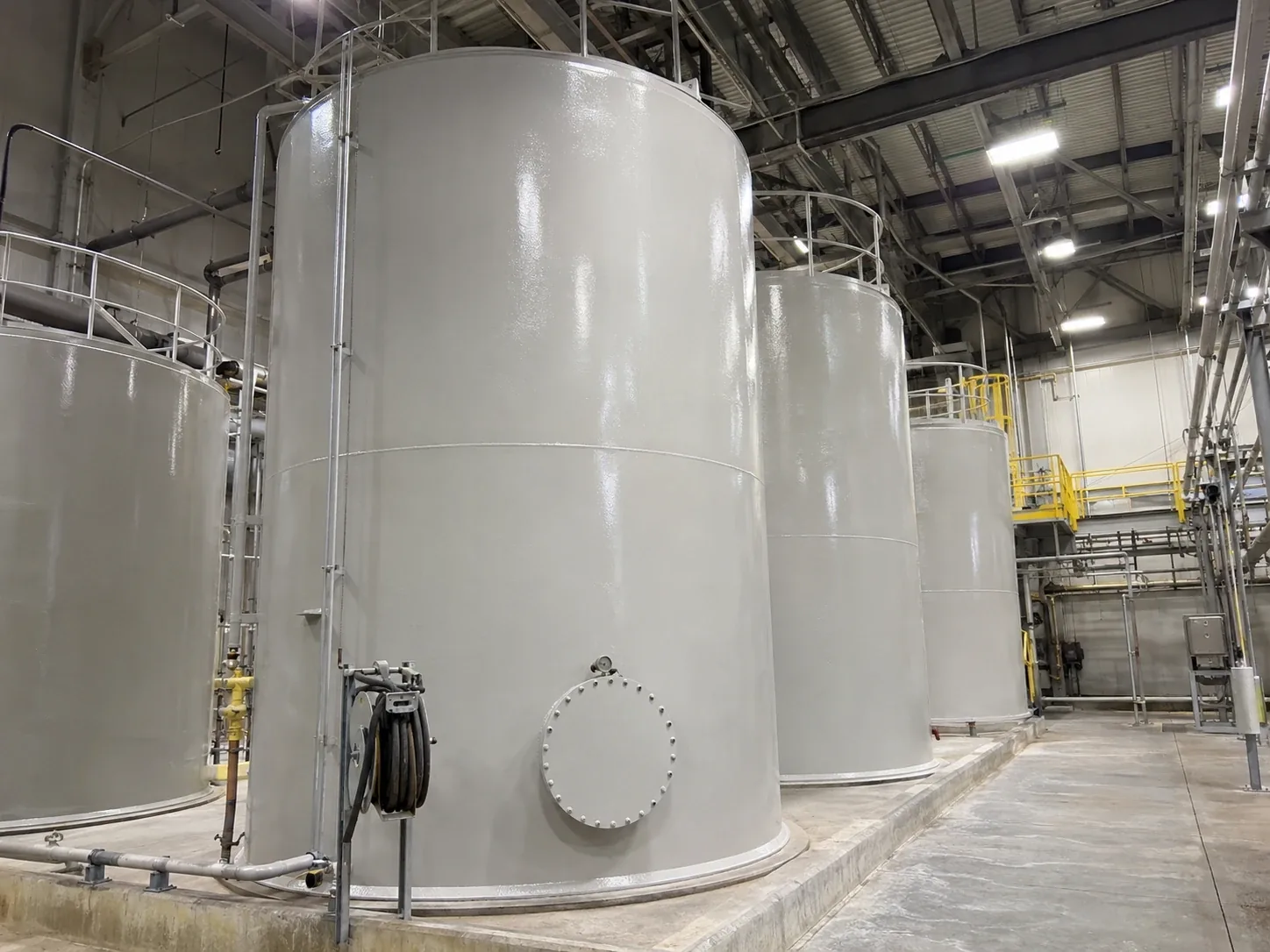
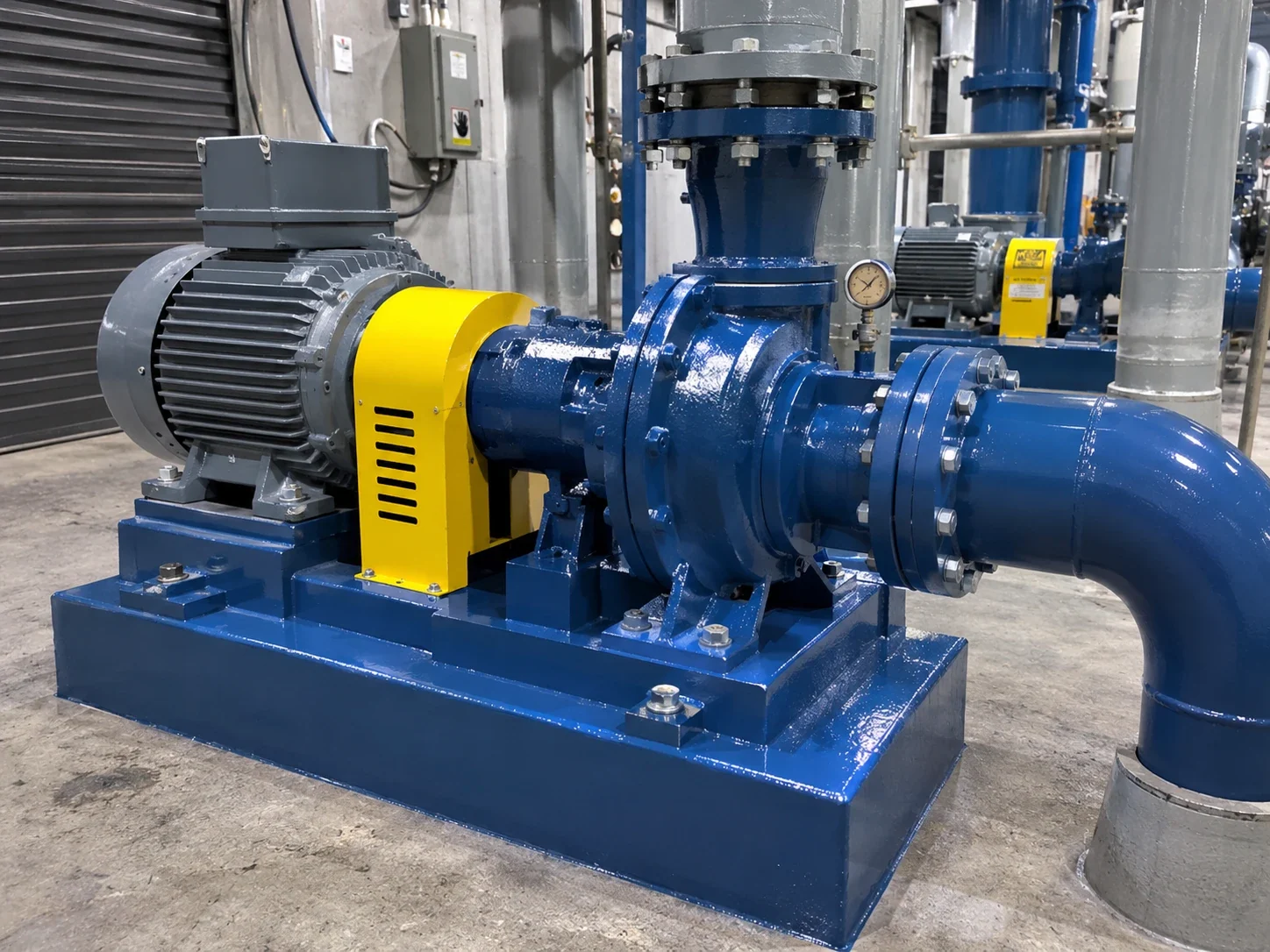
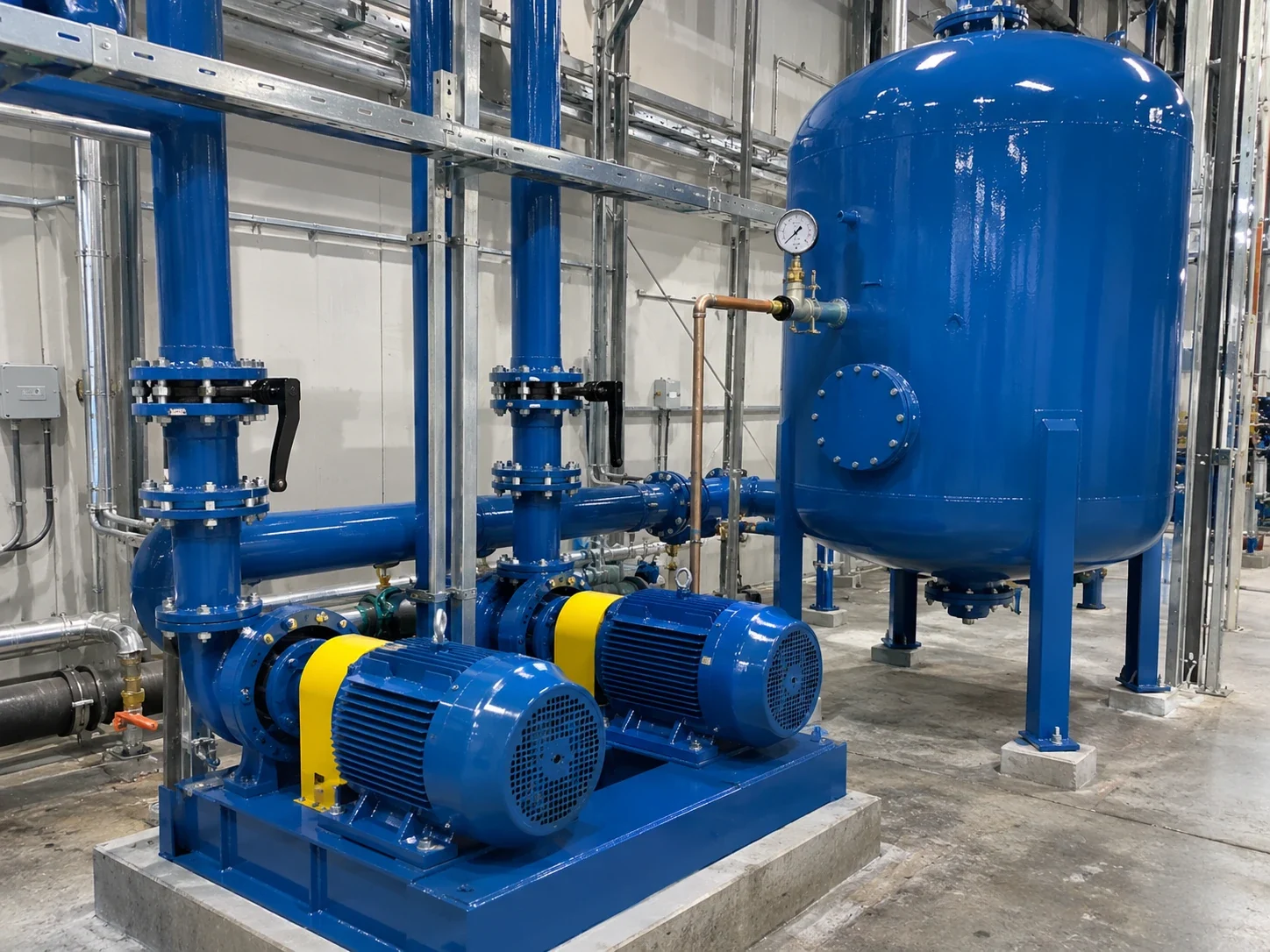
The outside of tanks cleaned back, primed and topcoated.
Machinery and equipment
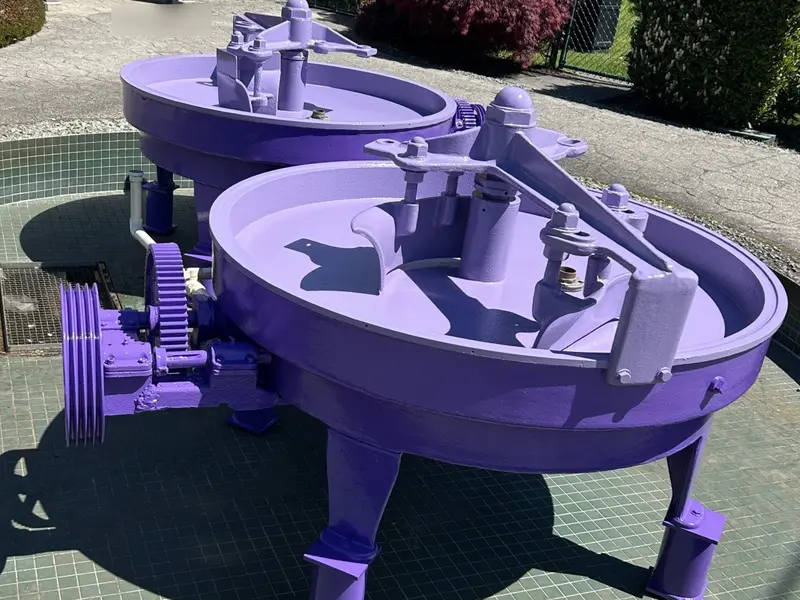
On one job, two pieces of antique machinery in a working water feature had rusted through their old coating. We sanded them back, took off the rust and recoated them.
Beams, columns and racking prepped and recoated, area by area, so the rest of the floor stays in use.
Who this is for
Plant and maintenance managers, facility managers, warehouse and plant owners, and engineers and general contractors. Equipment is easiest to coat when it isn't running, so we work in planned shutdowns, at night or on weekends, or one area at a time.
We check each piece and when it can be out of use.
Strip the rust
Hand and power tools take it back to sound steel.
Prime
Bare steel gets the primer set for the job.
Topcoat and test
Topcoats go on, then thickness and adhesion are tested.
See the full process, step by step
For plant and maintenance managers planning tank and equipment work, here is every step we follow, from the first walk to putting the equipment back in service.
1. Site walk
We go over every tank, machine and steel member on the list with your plant or maintenance manager: what shape it's in, how we'll reach it, and when it can be out of use.
Walk-through with your manager
Condition of each piece
Access
When it can be out of use
2. Safety
Your site's rules for working on and around equipment, WorkSafeBC requirements and our own safety program all go into the plan. Lifts are run by trained operators, safety data sheets stay on site, and anyone on the crew can stop the job if something isn't safe.
Your site's equipment rules
WorkSafeBC and our safety program
Trained lift operators
Safety data sheets on site
Anyone can stop the job
3. Scope
The written scope lists each piece, the prep level it gets (SSPC / AMPP, the data sheet, or your engineer's spec), and the primer and topcoat going on it. You approve it before we start.
Each piece listed
Prep level set
Primer and topcoat named
Your approval first
4. Planning the downtime
Equipment is easiest to coat when it isn't running, so we line the work up with your planned shutdowns, nights or weekends, or take it one area at a time.
Planned shutdowns
Nights and weekends
One area at a time
5. Gearing up
Prep tools, the coatings on the scope, masking and barriers all leave our warehouse together. Anything we don't own, like a particular lift, is booked ahead.
Prep tools and coatings
Masking and barriers
Lifts booked ahead
6. Protecting what's around it
Nameplates, gauges and anything else that shouldn't get paint are masked, and the area is closed off with tape, signs and cones.
Nameplates and gauges masked
Area closed off
7. Taking off the rust
Hand tools take care of flaking paint and light rust. Grinders and needle guns handle the heavy stuff. Everything is prepped to the level in the scope.
Scrapers and wire brushes
Grinders and needle guns
Prepped to the scope
8. Readings
Surface temperature and dew point are read before any coating. Steel has to be dry and 3°C or more above the dew point, with the air inside the data sheet's limits.
Surface temperature and dew point
At least 3°C above the dew point
Dry steel only
9. Prime and topcoat
Zinc-rich, epoxy, rust-inhibitive alkyd or DTM primer goes on first, then polyurethane, polyaspartic, epoxy or industrial enamel, by airless spray, brush and roll, or HVLP. Recoat times come from the data sheet, and we check wet film thickness as we go.
Primer, then topcoats
Airless, brush and roll, or HVLP
Recoat times from the data sheet
Wet film checked as we go
10. Testing
We take DFT readings and do adhesion tests on the finished coating. A third-party inspector checks it as well on jobs that have one.
DFT readings
Adhesion tests
Third-party inspector where the job has one
11. Back in service
Masking comes off, the area is cleaned up, and the equipment goes back into use once the coating has cured, with our written guarantee.
Masking off and area cleaned
Back in use once cured
Written guarantee
Standards: Tanks, machinery and steel are prepared to the SSPC / AMPP level or spec in the scope and coated to the manufacturer's data sheet, with film thickness checked as we go.
Safety on these jobs: We follow your site's rules for working around equipment, and any worker can stop the job if something isn't safe. Stop work authority, Lifts
Where we do this work: Tanks, machinery and steel at sites across Metro Vancouver and the Fraser Valley.
Tank exteriors, machinery and equipment, and structural steel and racking.
Do we have to shut everything down?
No. We can work in a planned shutdown, at night, on weekends, or one area at a time while the rest of your operation keeps running.
What coatings do you use on equipment?
A zinc-rich, epoxy, rust-inhibitive alkyd or DTM primer, then polyurethane, polyaspartic, epoxy or industrial enamel on top. The scope names the system for each piece.
How much does tank and equipment painting cost?
Pricing starts with a free site visit. It depends on how many pieces there are and how big, how much rust and old coating has to come off, how we reach it, the coating system, and when it can be out of use. You get a written quote before any work starts, and the price only changes if the scope changes or work is added or removed.
Looking for a free quote?
Tell us about your building and the work you need. We’ll get back to you to set up a site visit.
Phones answered 7am–7pm, every day. Quote requests are acknowledged the same day.
 Before & after
 Get a quote Text us