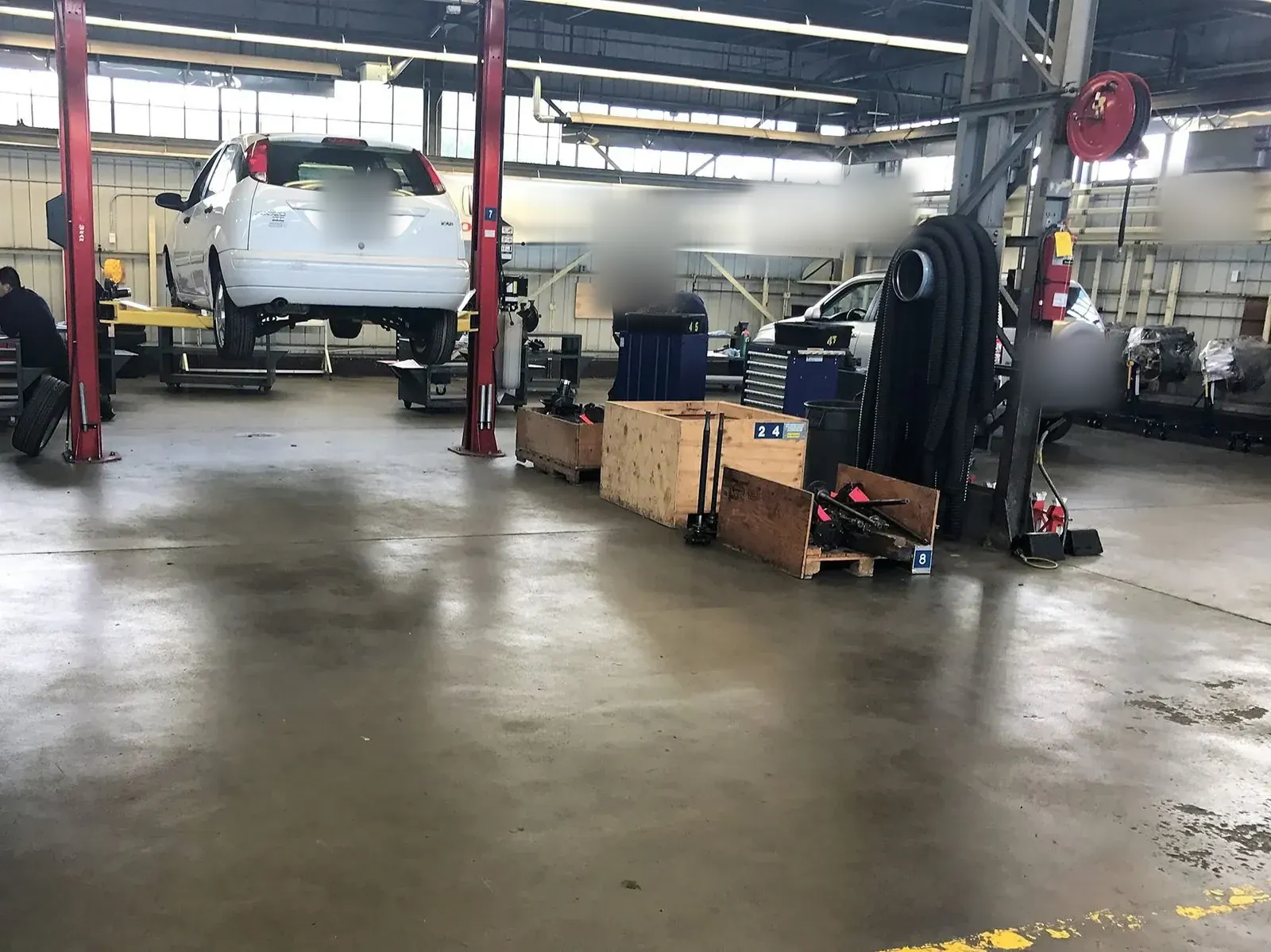
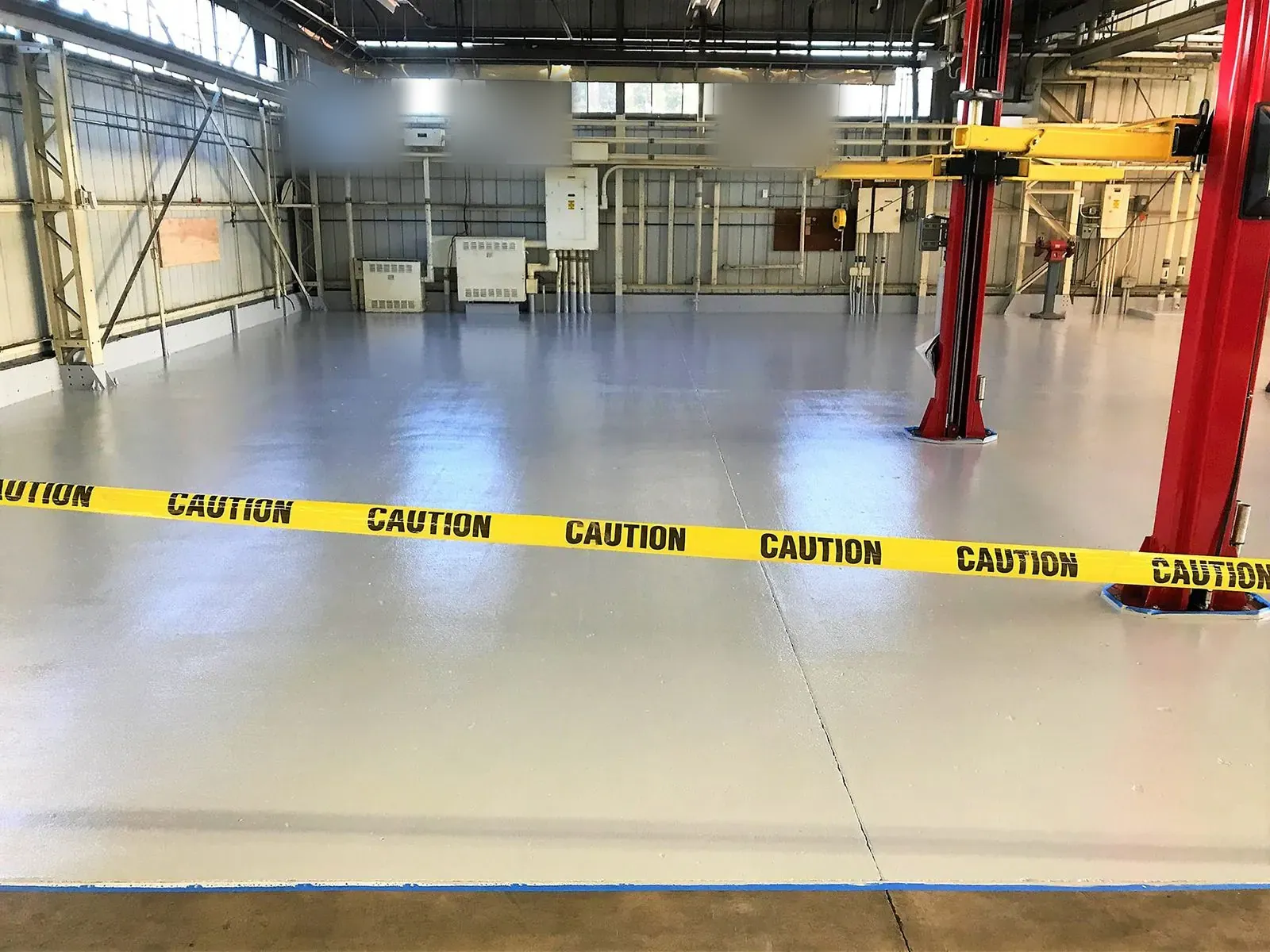
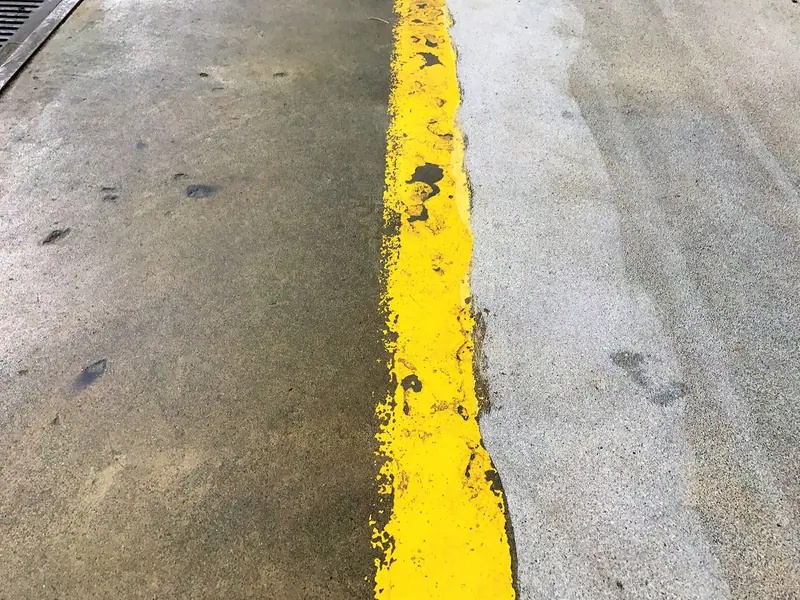
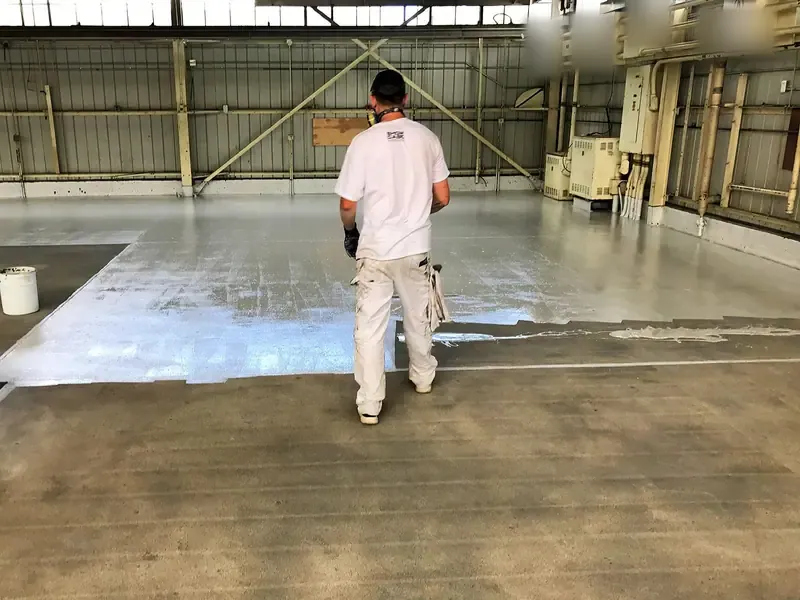
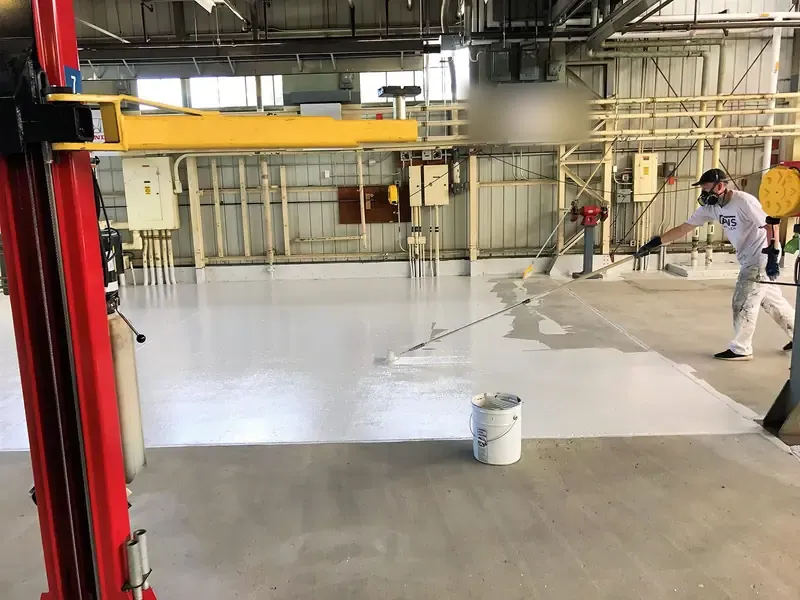
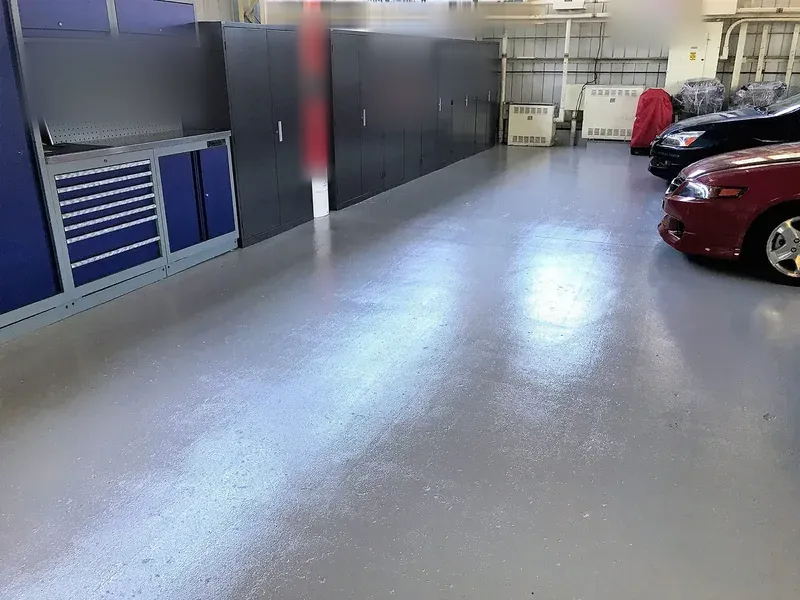
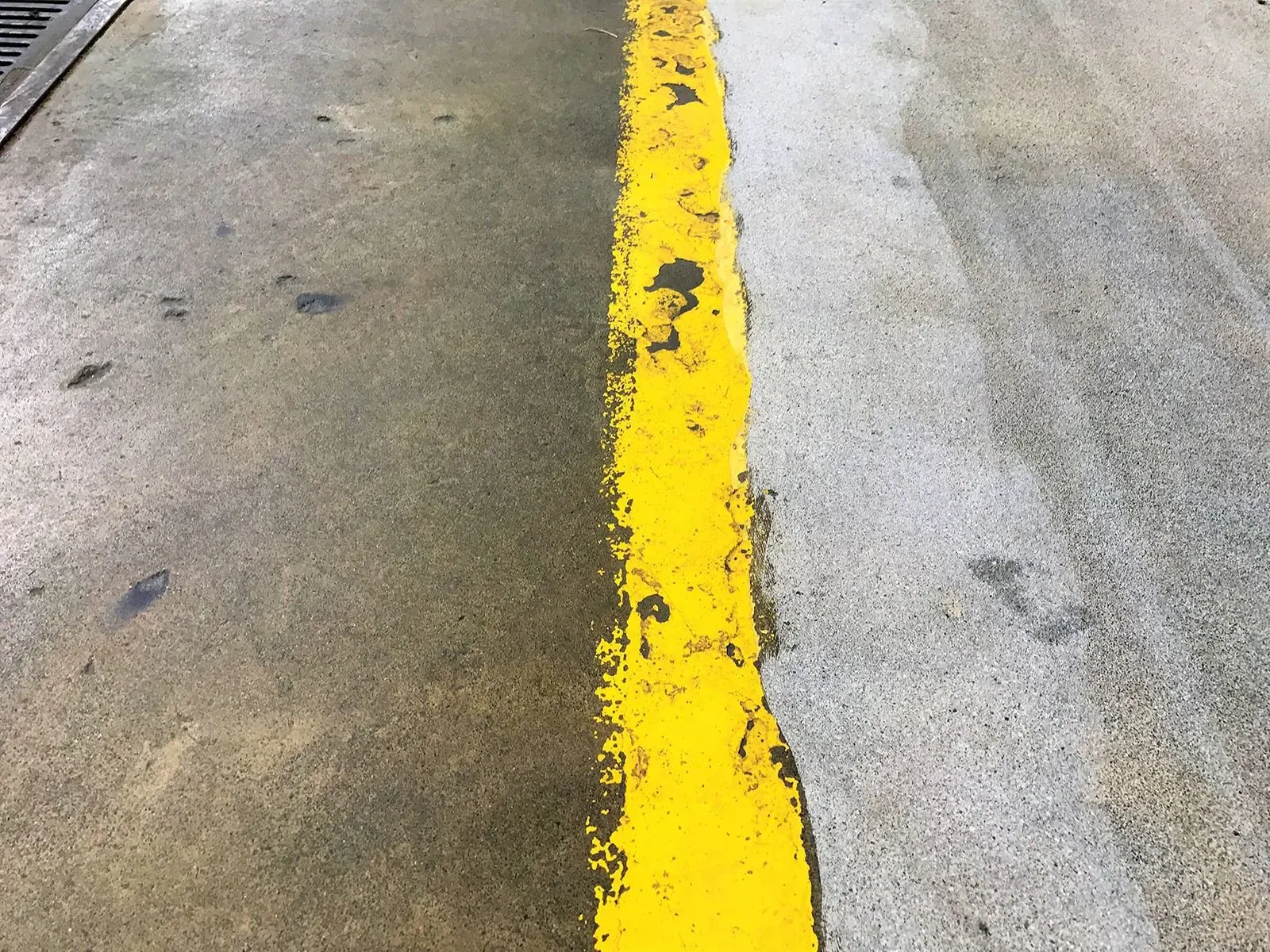
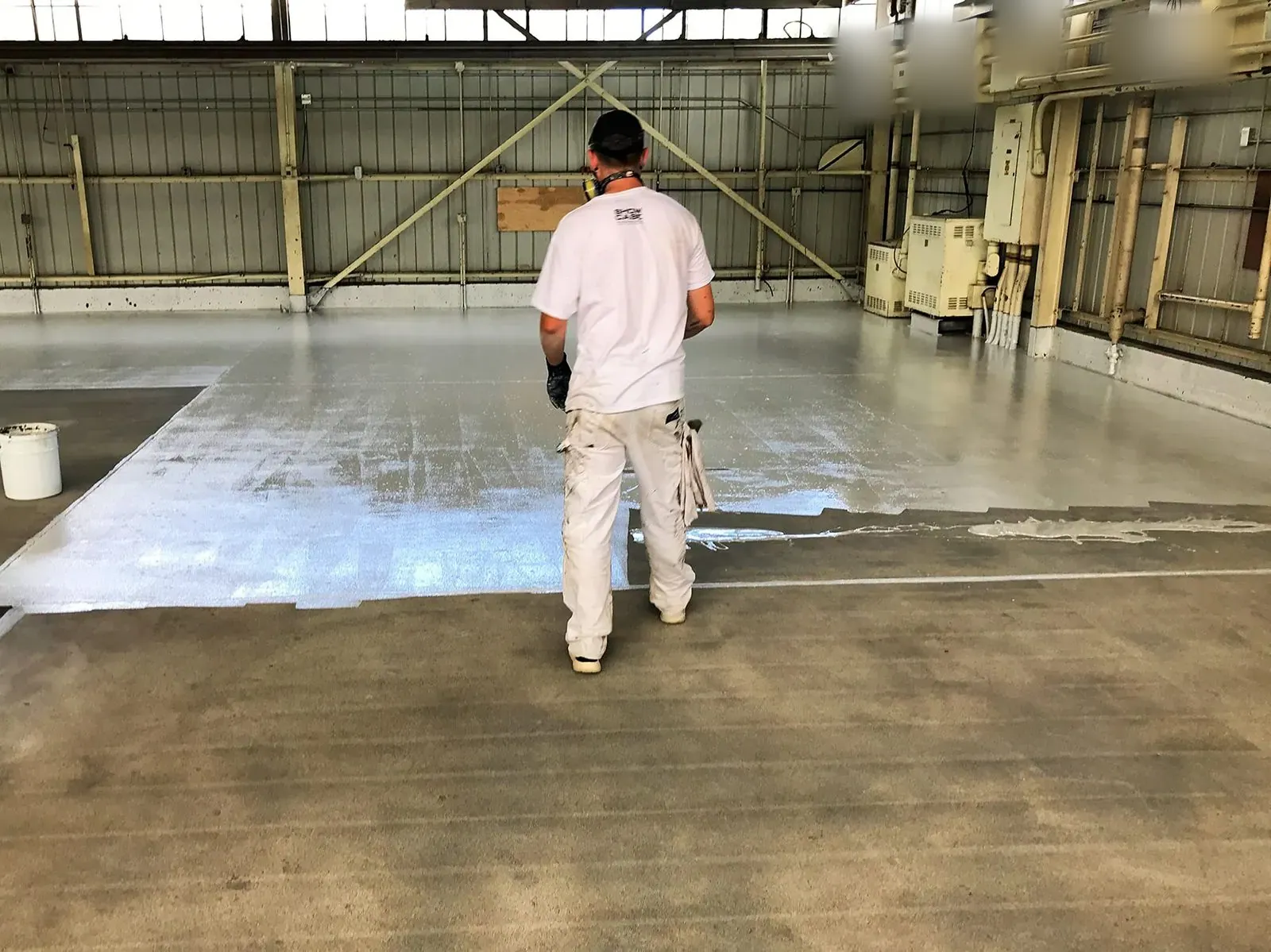
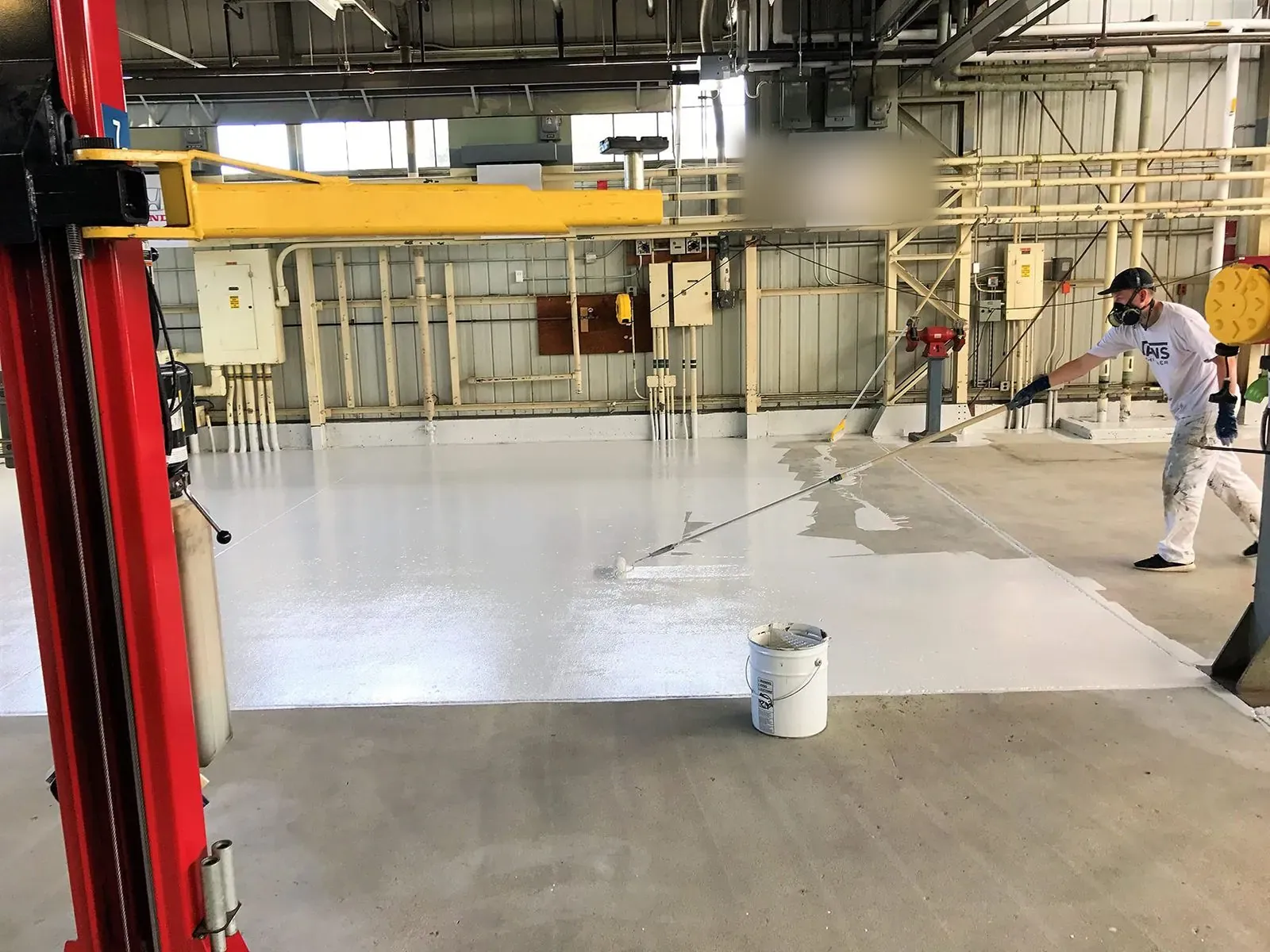
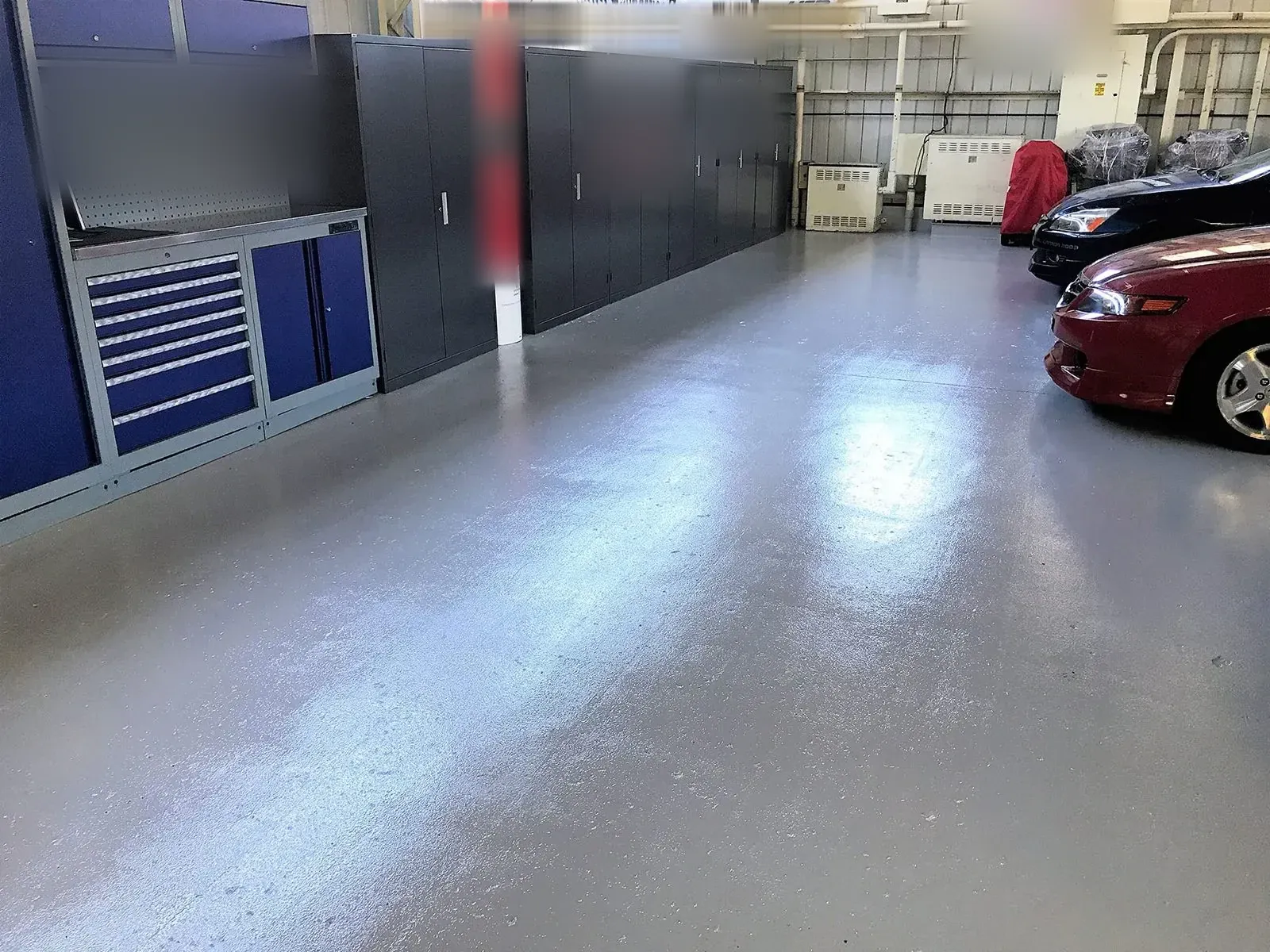
This floor had years of embedded oil contamination that regular washing and etching could not fully remove or prepare for a new coating system. To ensure proper adhesion, we had the surface shot blasted to remove contamination and open up the concrete profile. The resulting clean, even surface provided an ideal mechanical bond for the epoxy system, ensuring long-term durability and performance.
Safety on jobs like this: We keep safety data sheets on site for every product we use and handle them under our WHMIS program. Chemical safety, Emergency plan
The same steps apply on every job we do. In a working shop, they look like this.
01
Shop walkthrough
We check how deep the oil contamination goes, the state of any existing coating, and which bays can be closed and when.
02
Planning the preparation
The preparation method is chosen to suit the floor: cleaning and abrading for sound coatings, shot blasting where oil has soaked into the concrete.
03
Scheduling bay by bay
The shop is done in sections, so work carries on in the other bays. Coating is often done in the evening to give it the night to cure, and you know the plan for each week.
04
Safety and ventilation
The shop's exhaust and ventilation run during coating and curing, and closed bays are kept clear, following WorkSafeBC requirements. Walls and equipment that stay in the work area are protected.
05
Floor preparation
Each section is cleared, degreased and then abraded or shot blasted to open up the concrete. Dust is vacuumed off afterwards.
06
Inspection before coating
Oil left in the concrete will lift a coating, so the foreman checks each section is clean and properly profiled before any epoxy goes down.
07
Priming
Most floor epoxies prime themselves, so the first coat goes straight onto the prepared concrete. Where the product calls for a separate primer, that goes down first.
08
Epoxy finish and floor markings
The number of coats follows the product's guidelines and what you want from the floor. Shop floors are usually kept smooth so oil and fluids wipe clean, and existing safety lines and floor markings are repainted.
09
Cleanup
Masking comes off and the section is cleaned up, ready for the walkthrough.
10
Final walkthrough and handover
We confirm the coating has cured, walk the floor with you, and tell you when vehicles and equipment can go back on.
Standards: Concrete is prepared to SSPC standards, and the coating follows MPI standards and the epoxy manufacturer's data sheet, including cure time before traffic.
 Before & after
 Get a quote Text us