Free quote

Tell us about your project.

Tell us about your building and the work you need. We’ll get back to you to set up a site visit. Prefer to talk? Call 604-861-6644.

Text us

By sending a request, you confirm you have read the privacy policy.

Tilt-up concrete painting

Tilt-up concrete wall painting in Metro Vancouver and the Fraser Valley.

Cracked joints letting rain into your tilt-up walls?

We cut out the failed sealant, recaulk the joints, then repaint the walls from lifts, one side at a time, so your shipping keeps moving.

Tilt-up walls are large concrete panels. The panels move, and the caulked joints between them crack.

Book a site visit →

We fix the joints first, then prep and paint, so the new coat has sound concrete to hold on to.

Tilt-up work we do

  • Joints and window sealant

    Caulking pulling away from the concrete? We cut out the failed sealant and recaulk the panel joints and window perimeters, before any paint goes on.

    Recent jobs include 340 ft of failed joint sealant replaced in Delta (2025), 852 ft of joint, door and window sealant in Richmond (2026), and 14 joints and about 450 ft of window sealant in Langley (2025).

  • Concrete repair and prep

    Old bolts sticking out of the walls? We grind them off, prime them and caulk over them.

    Where the concrete needs repair, we repair it. Hairline cracks are sealed with the right compounds. The prep follows Master Painters Institute (MPI) standards and the coating's data sheet.

  • Repainting the walls

    Walls faded, stained or tagged? We wash, prep and repaint the panels, one elevation at a time.

    The coating system goes on exactly as quoted, to the manufacturer's data sheet and MPI standards. Graffiti-hit panels are repainted too.

  • Cracks and alkali stains

    Alkali bleeding is the white salt stain that pushes through paint on concrete. On one business centre we used an alkali-resistant bonding primer, then a high-build coat to bridge hairline cracks, then the finish coat.

  • Steel, doors and docks in the same job

    Canopies, railings, man doors, overhead doors and dock leveller frames can be done in the same visit. Dock and door numbers are painted back on when the coatings are done.

  • The bare concrete look

    Prefer to keep the concrete showing? We can apply a clear siloxane-based concrete sealer instead of paint.

  • Working around your building

    We work in phases, elevation by elevation, after hours or on weekends where needed. Tenants are told which side is next, and trucks keep moving.

Who this is for

Property managers, facility managers and owners of tilt-up warehouses and industrial buildings, including buildings with tenants who can't stop work.

Our tilt-up concrete work
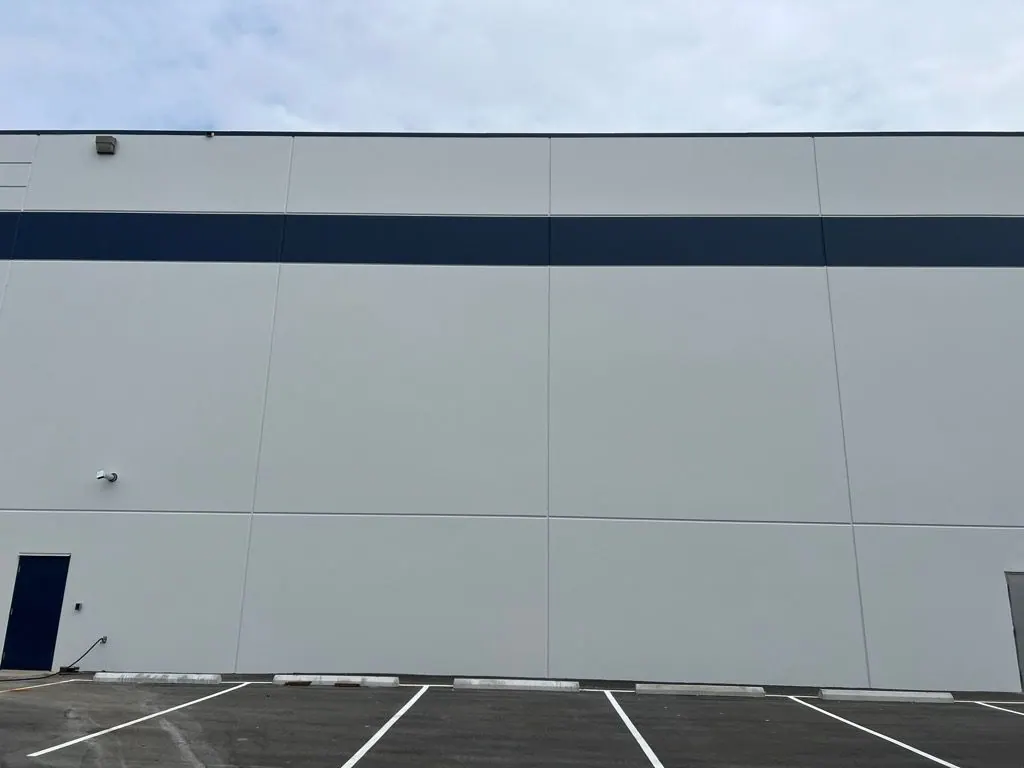
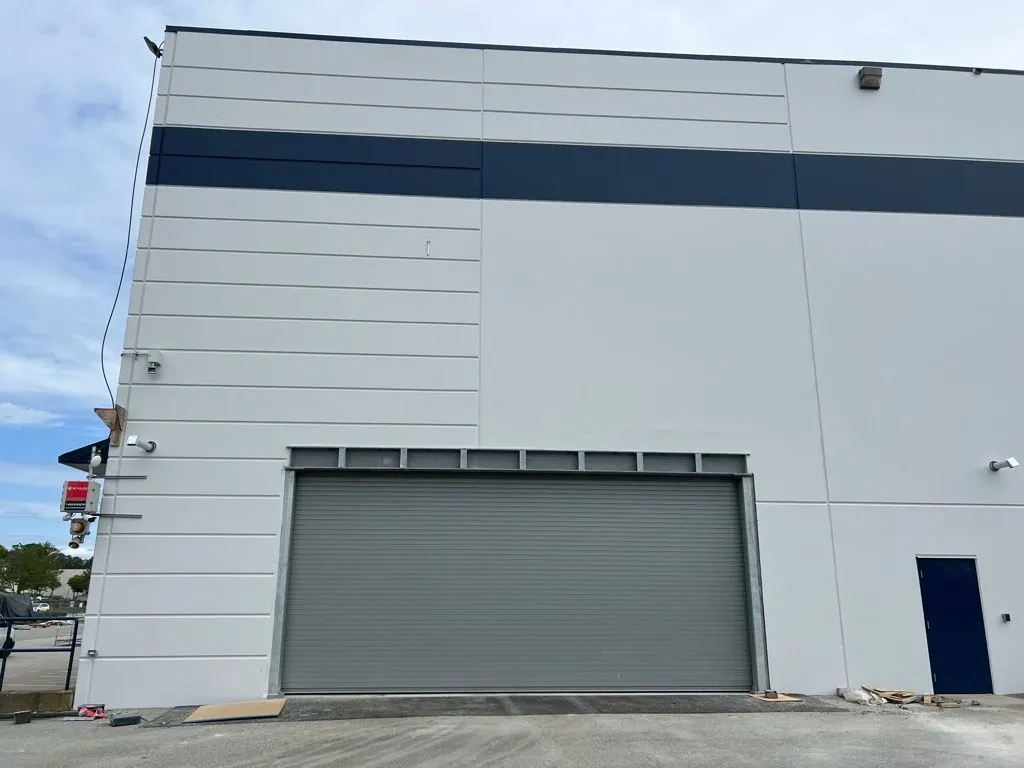
Tall grey tilt-up concrete warehouse wall with a navy band, the vertical panel joints visible
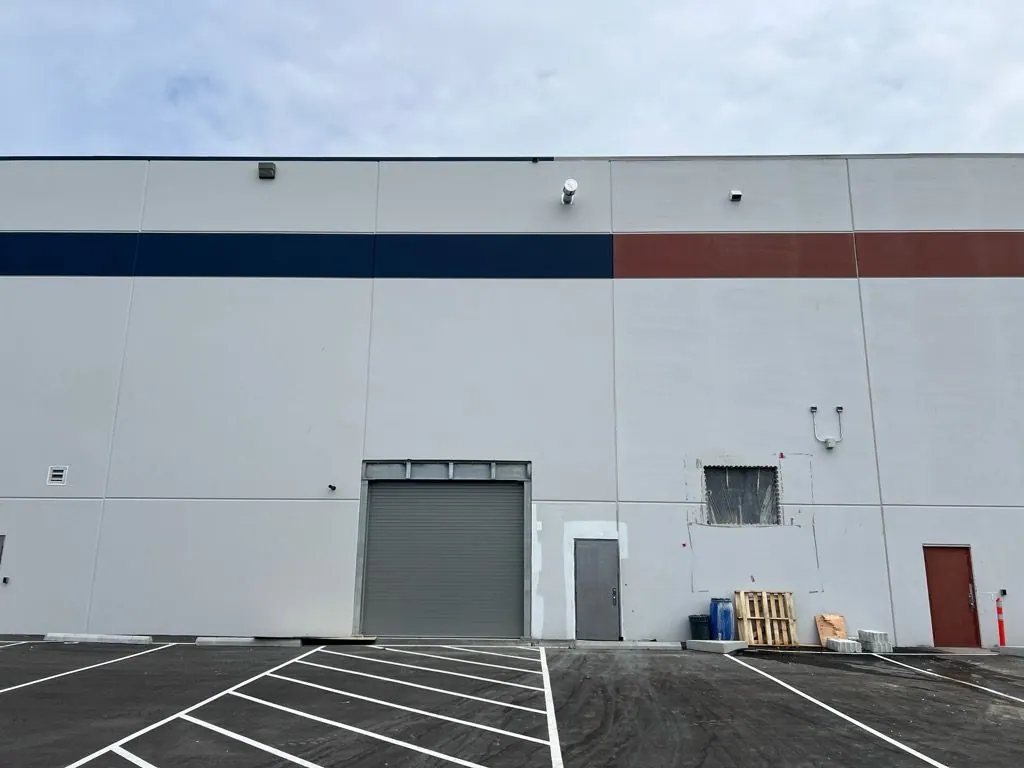
Warehouse end wall in fresh grey with a navy band, a grey roll-up door and a navy man door
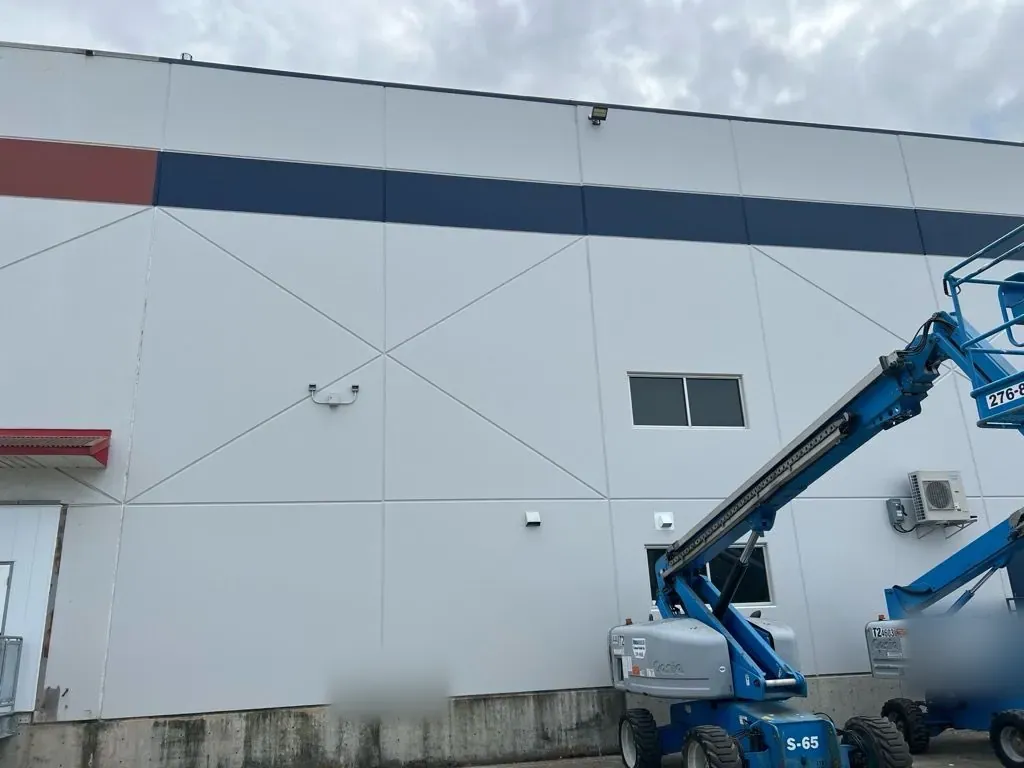
Warehouse wall partway through a colour change, red band on the right and navy band on the left, work in progress
Warehouse wall with its red band being replaced by navy, with boom lifts below
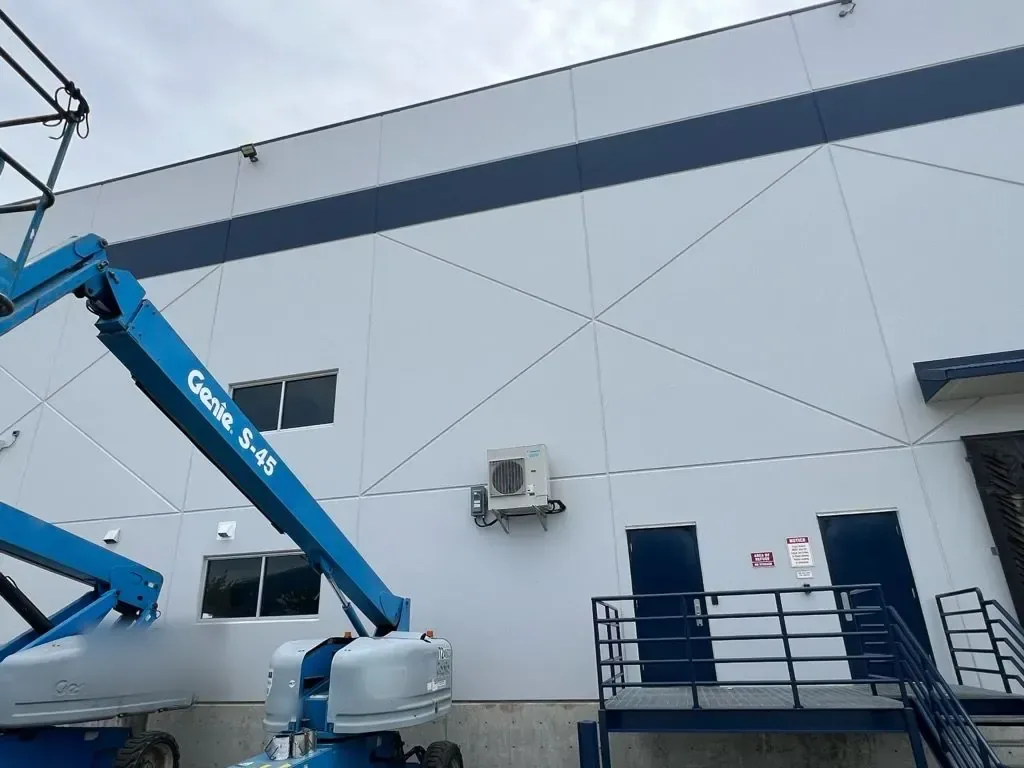
Warehouse wall with a navy band, navy doors, a steel platform and a boom lift
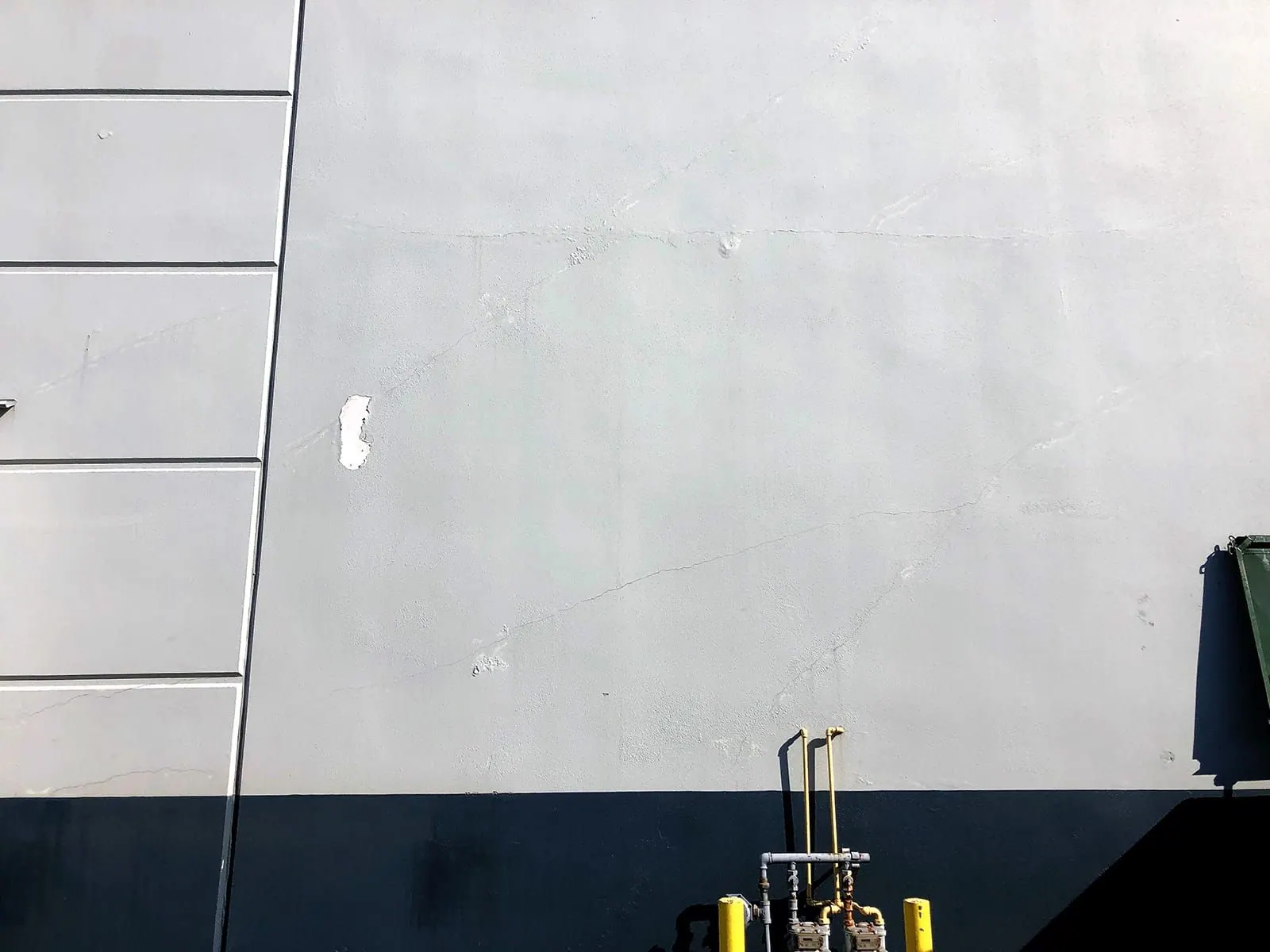
Before painting: cracked and patched concrete wall on a business complex
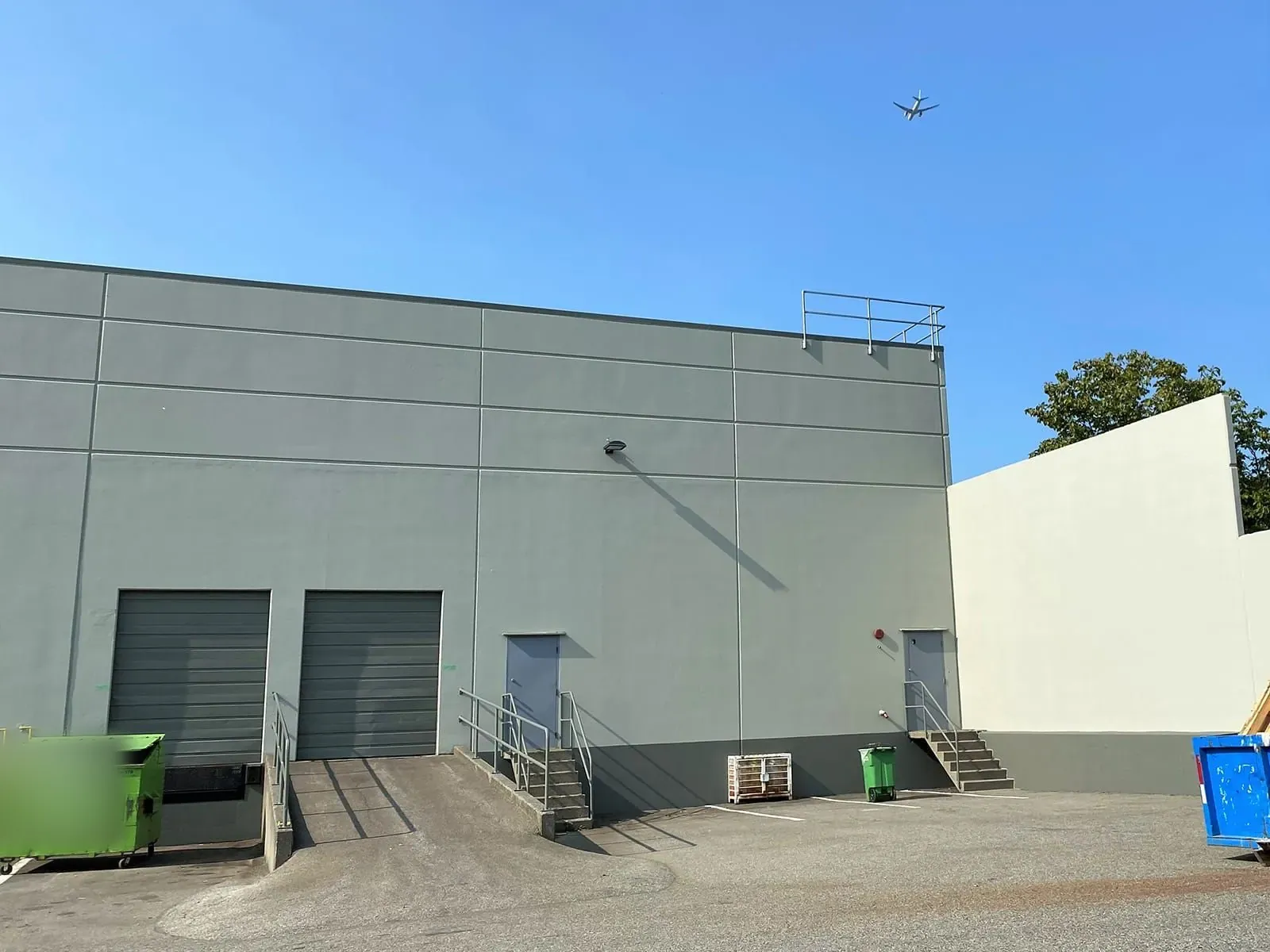
After painting: business complex rear wall repainted dark grey, with loading doors
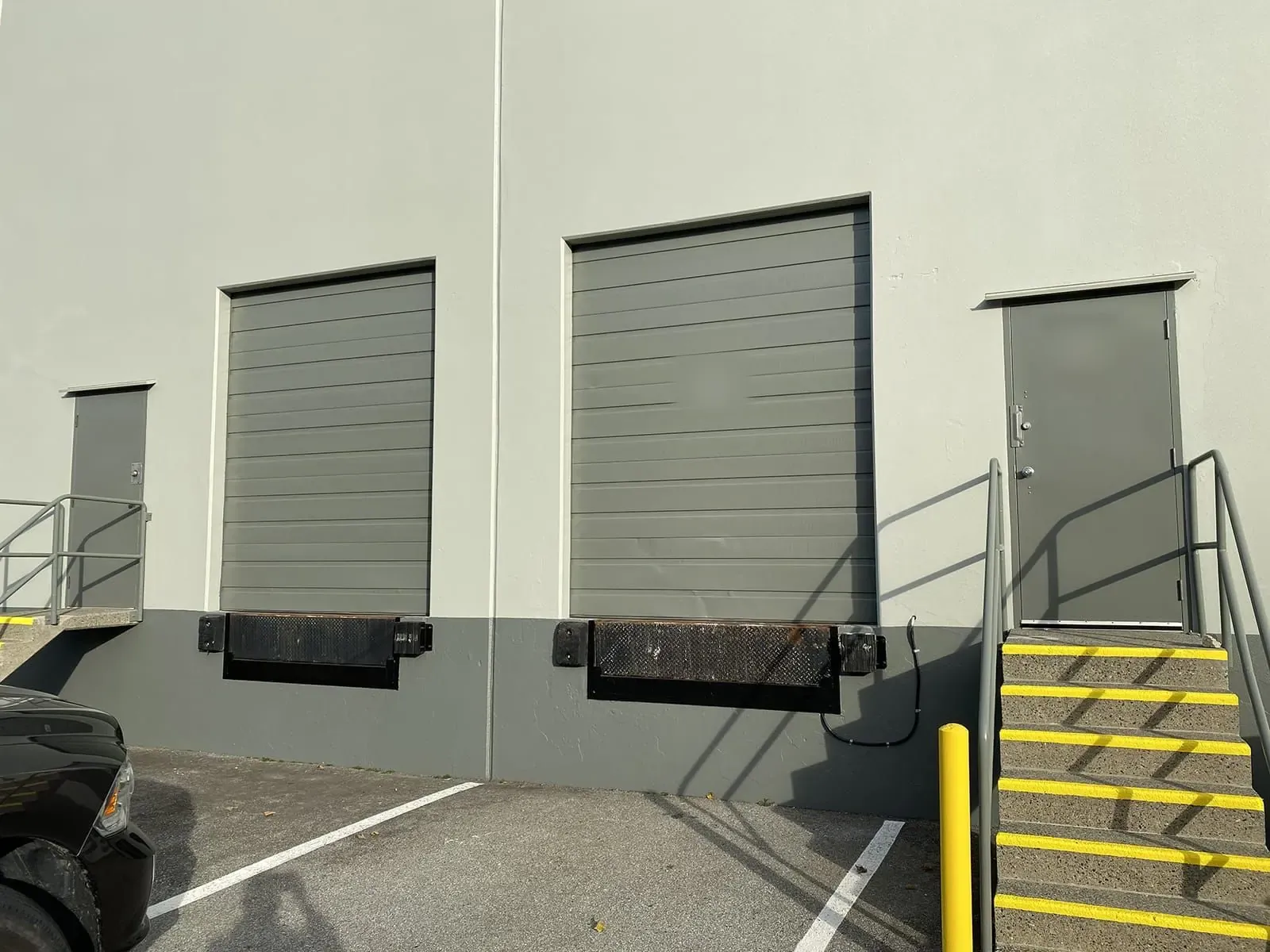
After painting: grey concrete wall with two loading doors, dock levellers and yellow stair nosings

How a tilt-up job runs

  1. Walk-through and scope

    We walk the building with you and put every wall, joint, repair and coating into a written scope for your approval.

  2. Joints first

    Failed sealant is cut out and the panel joints and window perimeters are recaulked before any paint goes on.

  3. Prep and repairs

    The walls are washed. Concrete repairs, old bolts and hairline cracks are dealt with, and bare spots are primed.

  4. Paint, inspect, hand back

    The quoted coating system goes on from lifts, one elevation at a time. Then we walk the finished building with you.

See the full process, step by step

For property and facility managers planning a tilt-up repaint, here is every step we follow, from the first walk-around to handing the building back.

  1. 1. Site tour

    We walk the whole building with your property or facility manager. We look at every tilt-up panel and joint, the steel, doors, canopies and signage, and note the condition of each. We take measurements, check lift access around the building, and learn how the site runs: shipping hours, dock traffic, tenants and the safety practices already in place.

    • Walk-around with your property or facility manager
    • Every panel, joint and surface and its condition recorded
    • Measurements and lift access checked
    • Shipping hours, docks and tenants noted
    • Your site's safety practices reviewed
  2. 2. Safety planning

    Our safety plan combines your site's rules, WorkSafeBC requirements and our own safety program. High work is done from aerial lift platforms, and everyone who operates one is safety trained. A harness is worn on boom lifts, and every lift is inspected before use. Safety data sheets for every product are kept on site, and any worker can stop the job if something is unsafe.

    • Your site rules, WorkSafeBC and our safety program combined
    • Aerial lift platforms run only by safety-trained operators
    • Harnesses on boom lifts, lifts inspected before use
    • Protective gear set for the job: hi-vis, hard hats, respirators, safety glasses, steel-toe boots, hearing protection
    • Safety data sheets on site for every product
    • Any worker can stop the job if something is unsafe
  3. 3. Scope and quote

    We put everything into a written scope of work: which walls and steel are included, how each will be prepared, and the coating system for each one. You review it with your team, and work only goes ahead once you've approved exactly what you want.

    • Written scope of every surface included
    • Prep method for each surface
    • Coating system specified surface by surface
    • Reviewed and approved by your team before work starts
  4. 4. Scheduling around your operation

    We schedule with you so the building keeps running. We work one elevation at a time, tenants know which side is next, and work can run after hours or on weekends where needed. Dock walls and overhead doors are done in sections so trucks keep moving.

    • Planned around shipping and receiving
    • One elevation at a time
    • Tenants told which elevation is next
    • After hours and weekends where needed
  5. 5. Preparing at our warehouse

    The job starts at our own warehouse. We order the coatings specified for your building and load the vehicles with everything needed. Lifts and anything we don't keep on hand are rented in advance, and the crew goes over the plan before leaving so everyone knows their part.

    • Coatings ordered to the quoted specification
    • Pressure washers, grinders, scrapers and sanders
    • Sprayers, brushes and rollers
    • Sealants, patching compounds and primers
    • Caution tape, signs and cones
    • Aerial lifts, scaffolding and other equipment rented in advance
    • Crew reviews the plan before leaving
  6. 6. Sign-in and daily briefing

    We arrive on schedule, sign in, and join your site's safety briefing. The crew walks the day's work area so everyone knows the zones, the traffic routes and where the lifts will be.

    • Arrive on schedule and sign in
    • Daily safety briefing with your site
    • Crew walks the day's zones, traffic routes and lift positions
  7. 7. Work zones and protection

    Each work area is closed off with caution tape, signs and cones, so people and vehicles stay clear of lifts and spraying. Anything not being painted is protected from overspray before coating starts.

    • Work areas closed with caution tape, signs and cones
    • People and vehicles kept clear of lifts and spraying
    • Surfaces not being painted protected from overspray
  8. 8. Exterior wash

    The walls are washed to the scope of work. Dirt, chalking and mildew come off, efflorescence is removed, and heavy rust staining is cleaned off.

    • Pressure washed to the scope of work
    • Dirt, chalking and mildew removed
    • Efflorescence removed
    • Heavy rust staining cleaned off
  9. 9. Surface cleanup

    Every surface is cleaned of anything that would stop the coating bonding: gum, grime, oil, old tape and tape residue. Old signage is taken down, unwanted steel sticking out of the walls is ground off, and old wires are removed safely. Those spots are then primed.

    • Gum, grime, oils, tape and tape residue removed
    • Old signage taken down
    • Protruding steel and old bolts ground off
    • Old wires removed safely
    • Bare spots primed
  10. 10. Joints, repairs and sealant

    Failed sealant is cut out and the panel joints and window perimeters are recaulked. Concrete repairs are completed, major imperfections are ground out, and hairline cracking is sealed with the right compounds, so the finished walls shed water and look even.

    • Failed joint and window sealant cut out and replaced
    • Concrete repairs completed
    • Major imperfections ground out
    • Hairline cracks sealed with the right compounds
    • Ground-off bolts primed and caulked over
  11. 11. Steel prep

    Railings, bollards, man doors, overhead doors, canopies, dock levellers and other steel are scraped, sanded, repaired and rust-primed to the scope of work, so the finish coats go onto sound metal.

    • Railings and bollards
    • Man doors and overhead doors
    • Canopies and dock levellers
    • Scraped, sanded, repaired and rust-primed
  12. 12. Inspection before coating

    Before any finish goes on, we check that every surface has been washed, cleaned, repaired and primed to the scope, and that weather and surface conditions are within the limits on the manufacturer's data sheet.

    • Every surface washed, cleaned, repaired and primed
    • Weather and surface conditions within data sheet limits
  13. 13. Applying the coating system

    The coating system goes on exactly as quoted, applied to the manufacturer's data sheet and MPI standards. That may be a primer coat, an intermediate coat and top coats, or a high-build elastomeric. Where you've chosen the bare concrete look, a clear siloxane-based concrete sealer goes on instead of paint.

    • Coating system applied as quoted
    • Primer, intermediate and top coats, or high-build elastomerics
    • To the manufacturer's data sheet and MPI standards
    • Clear siloxane-based sealer instead of paint, if you want the concrete look
    • Order of work planned for each building
  14. 14. Dock and door numbers

    Once the coatings are on, dock numbers, door numbers and other markings are painted back on, so drivers and staff can find their way around the building.

    • Dock numbers
    • Door numbers
    • Other markings your site needs
  15. 15. Final inspection

    The finished building is inspected by our team and your property or facility manager. Anything that isn't right is fixed before sign-off.

    • Inspected by our team and your manager
    • Touch-ups done before sign-off
  16. 16. Cleanup and handover

    We clear away all equipment and protection and leave the site cleaner than we found it, with a building that looks fresh and is protected for years to come.

    • Equipment and protection removed
    • Site left cleaner than we found it
    • Building handed back

Safety on these jobs: Our crews work under written safety programs, from fall protection to lead paint. Basic safety, Advanced safety

Where we do this work: We repaint tilt-up concrete warehouses and industrial buildings from Horseshoe Bay to Chilliwack, including Port Kells in Surrey, Annacis Island in Delta, Richmond, Langley, Coquitlam, Port Coquitlam and Abbotsford.

More warehouse painting services Warehouse painting Dryfall ceilingsWarehouse safety linesEpoxy floor coatingConcrete floor paintingParking lot line paintingSafety yellow and bollards

Related Warehouse painting in RichmondWarehouse painting in DeltaWarehouse painting in SurreyWarehouse painting in LangleyMaintenance contracts

Our tilt-up work, by city

  • Delta

    • 2025: tilt-up warehouse repainted from lifts, with 340 ft of failed joint sealant replaced. Concrete walls, steel canopy frames, railings and dock leveller frames all done.
    • 2020: tilt-up concrete warehouse repainted to a written MPI-based spec, checked by an independent coating inspector.
  • Richmond

    • More than 35,000 sq. ft. of tilt-up wall repainted across three sides of a 113,000 sq. ft. building. See the project
    • 2025: tilt-up warehouse repainted in phases by elevation, with failed joint sealant replaced on 3 elevations.
    • 2026: 852 ft of joint, door and window sealant replaced, and graffiti-hit panels repainted.
    • 2026: tilt-up building sealed with a clear siloxane-based concrete sealer, with new window sealant.
  • Langley

    • 2025: tilt-up industrial building repainted, with 14 joints and about 450 ft of window sealant replaced.
  • Surrey

    • 2017: tilt-up warehouse with concrete walls painted on 3 sides, plus 5 man doors and safety yellow bollards.

Common questions

Don't see your question?

Call 604-861-6644 Talk to a painter

Why do the joints between tilt-up panels leak?

Tilt-up panels move. The caulked joints between them crack and let water in. We cut out the failed sealant and recaulk the joints and window perimeters before we paint.

Can you repaint while the building stays in use?

Yes. We plan each section around your tenants' hours and doors, and work one elevation at a time. On one Richmond tilt-up job, a general contractor and other trades were on site at the same time. We signed in each morning, held a joint safety meeting, and cautioned off our own work zone.

What prep do tilt-up walls need?

The walls are washed, then repaired and primed. Failed sealant comes out, concrete repairs are made, old bolts are ground off, primed and caulked over, and hairline cracks are sealed. The prep follows MPI standards and the coating's data sheet.

Can you fix cracked walls and alkali stains?

Yes. Alkali bleeding is the white salt stain that pushes through paint on concrete. On one business centre we used an alkali-resistant bonding primer, then a high-build coat to bridge the hairline cracks, then the finish coat.

Can we keep the bare concrete look?

Yes. We can apply a clear siloxane-based concrete sealer instead of paint.

How much does it cost to paint a tilt-up building?

Every building is priced after a free site visit. What sets the price: wall area and height and the lifts it needs; how many joints and window perimeters need recaulking; how much repair and prep; the coating system or sealer; how much steel and how many doors; and whether we work around your shifts, after hours or in phases. You get a written quote, and the price only changes if the scope changes or work is added or removed.

Is the work guaranteed?

Two-coat work comes with a 2-year guarantee against coating failure, and single-coat work with 1 year. For the full terms, email acraigandson@yahoo.ca. On jobs that call for it, we work to a written spec with an independent coating inspector, as on a Delta tilt-up warehouse in 2020.
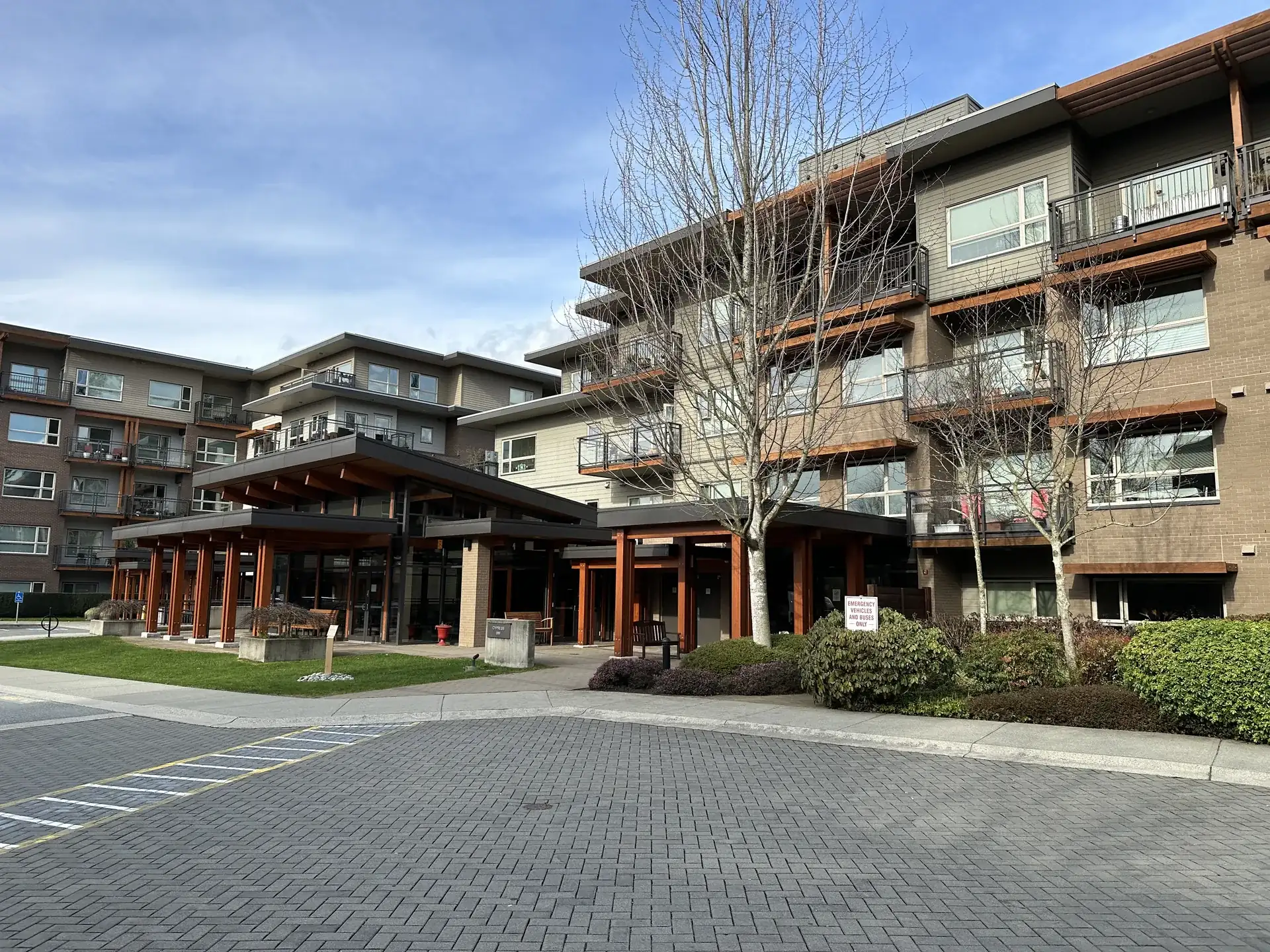
Four-storey building with restained wood columns and beams at the entrance

Looking for a free quote?

Tell us about your building and the work you need. We’ll get back to you to set up a site visit.

Phones answered Monday to Friday, 7am–7pm. Quote requests are acknowledged the same day.

  • Bonded & insured
  • Member in good standing of DC38
  • Red Seal painters on our crews
  • Lead jobs done by lead-trained crews

Tell us about your project.

By sending a request, you confirm you have read the privacy policy.